You may also like

2022
Recanati. Views
Recanati is an Italian town of 20 975 inhabitants in the province of Macerata in the Marche region.
2018
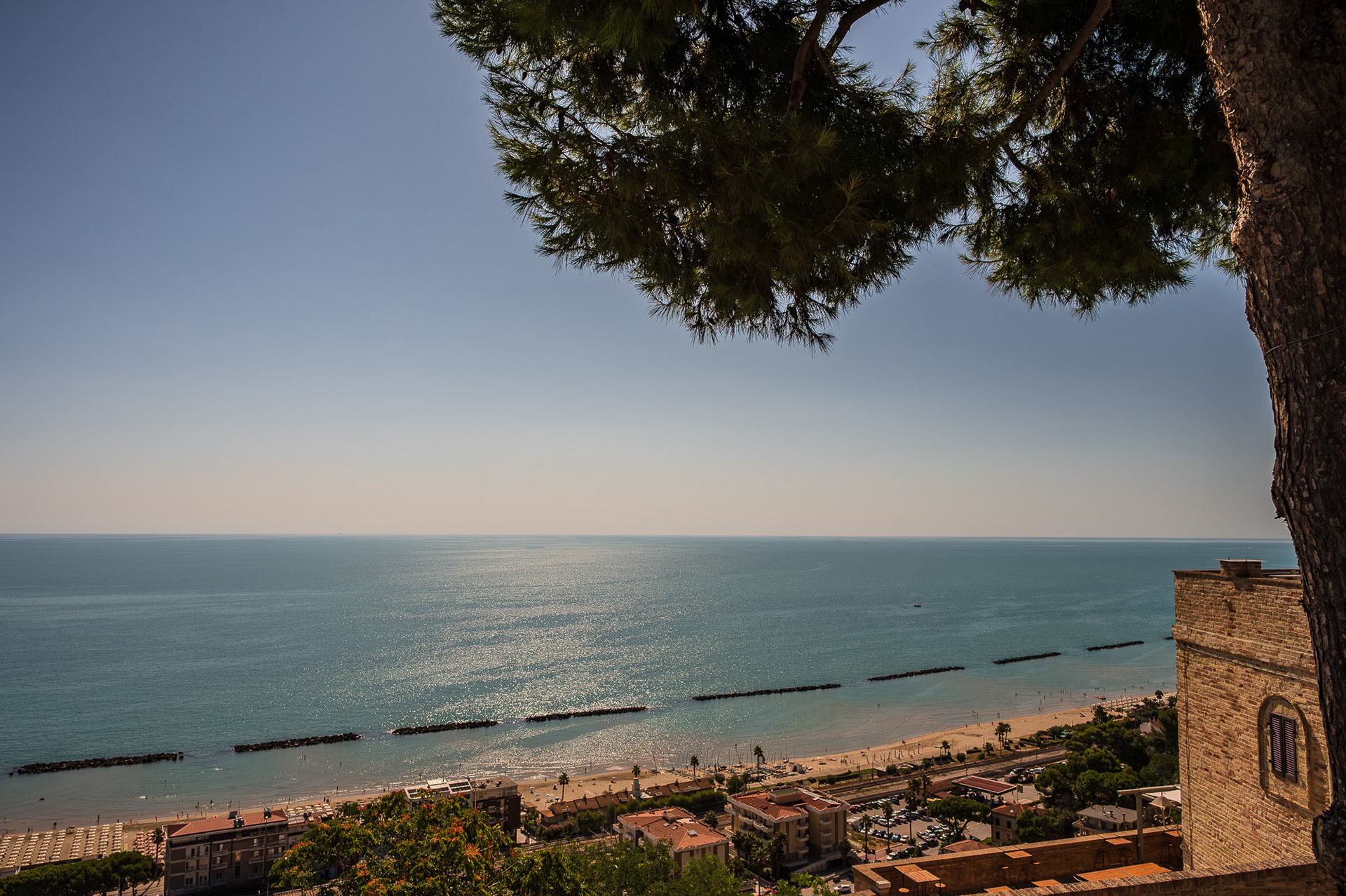
Rotella (AP) - Panoramas
2024
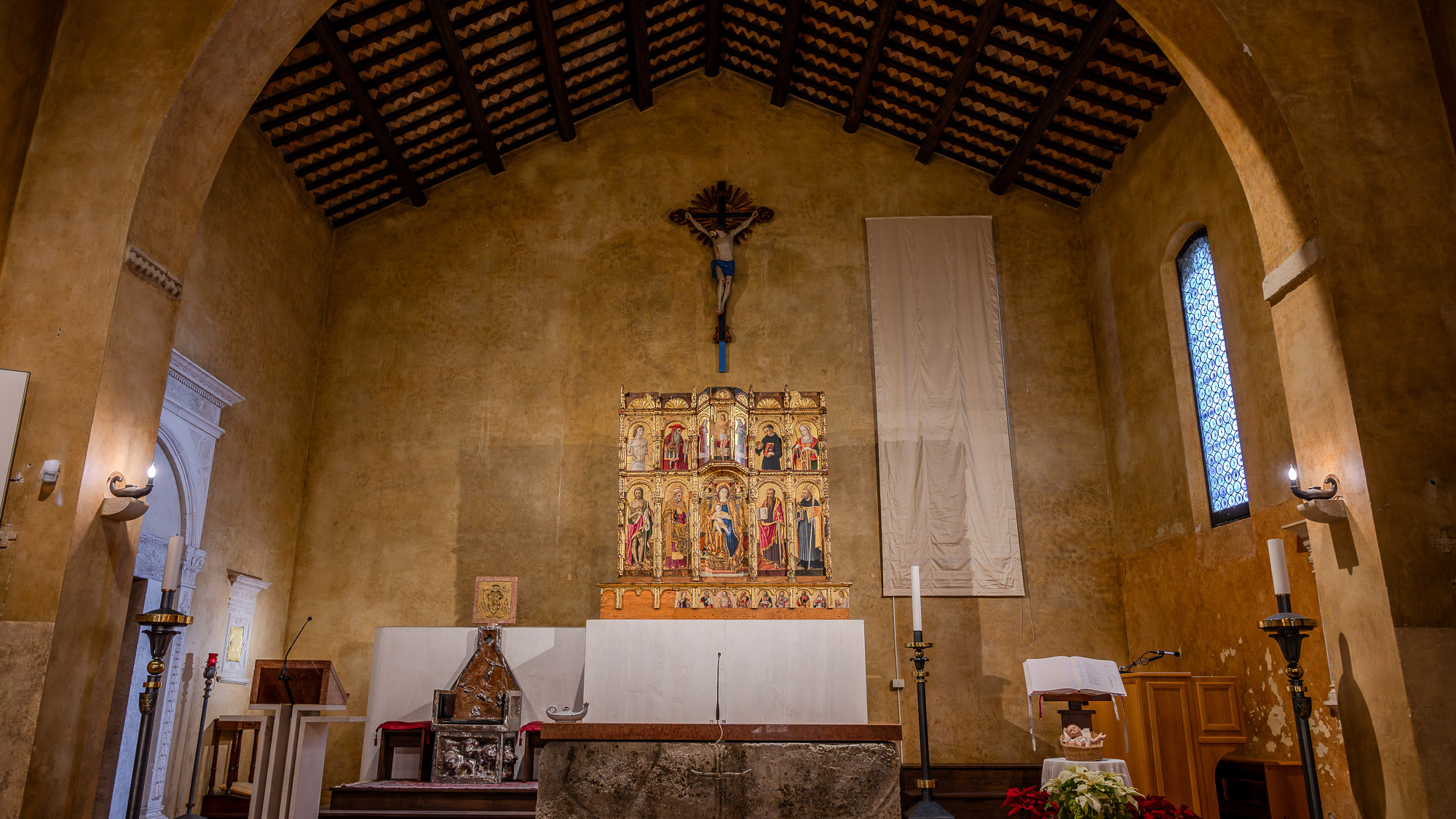
Torre di Palme. Church of Sant'Agostino
Church of Sant'Agostino. the Polyptych by Vittore Crivelli. The building is entirely made of brick and has two entrances. The interior has a single room, covered by wooden trusses.
2023
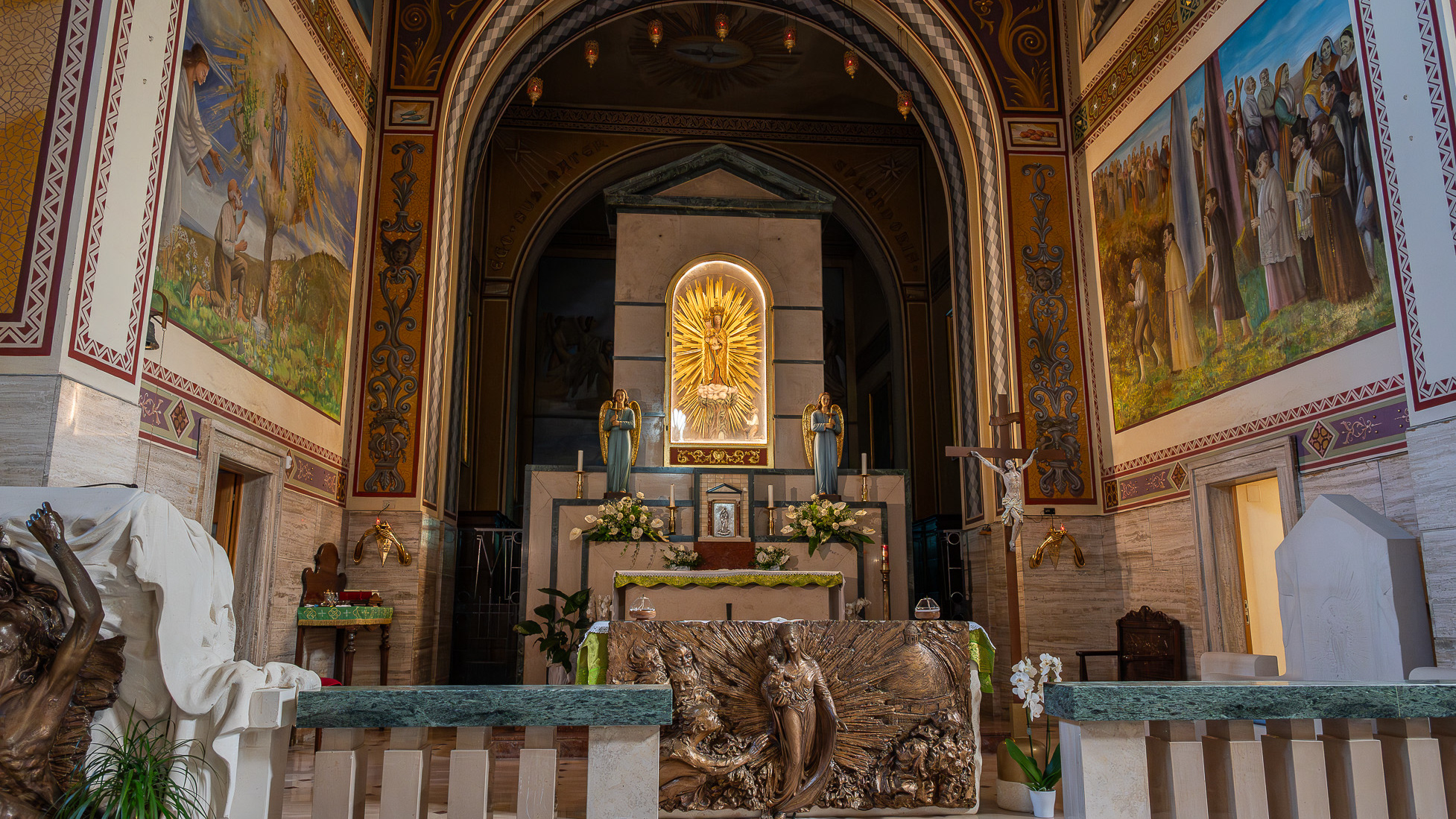
Giulianova. The sanctuary of the M. dello Splendore
The sanctuary of the Madonna dello Splendore is a cult building in Giulianova, with the convent, the miraculous fountain and the Art Museum of Splendor and the "Padre Candido Donatelli" Library
2025
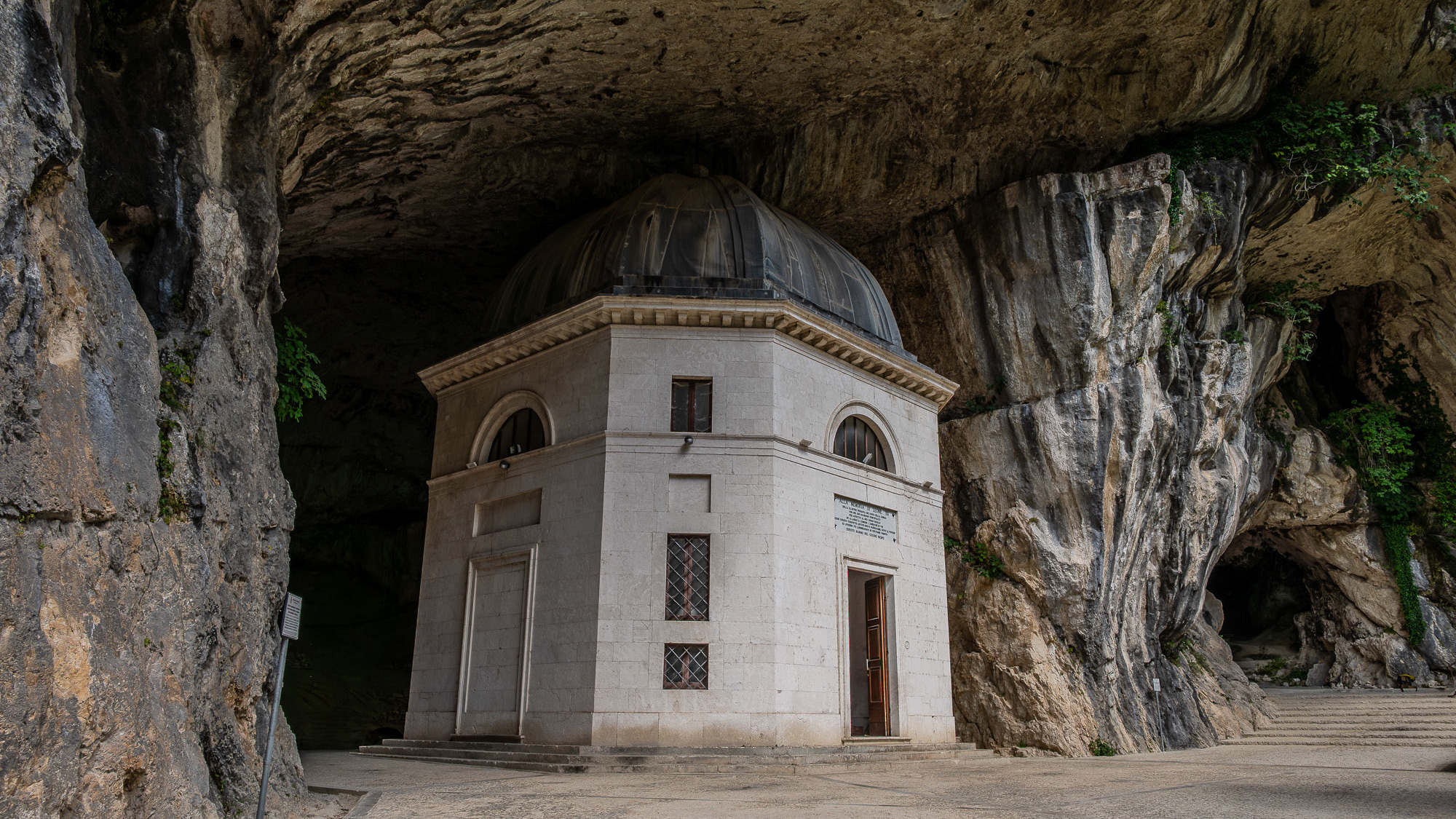
Genga. The Valadier Temple
The Valadier Temple was built in 1828 next to an enormous cave at the behest of Pope Leo XII, designed by the architect Giuseppe Valadier.
2025
Fabriano. Museum of Paper and Watermark
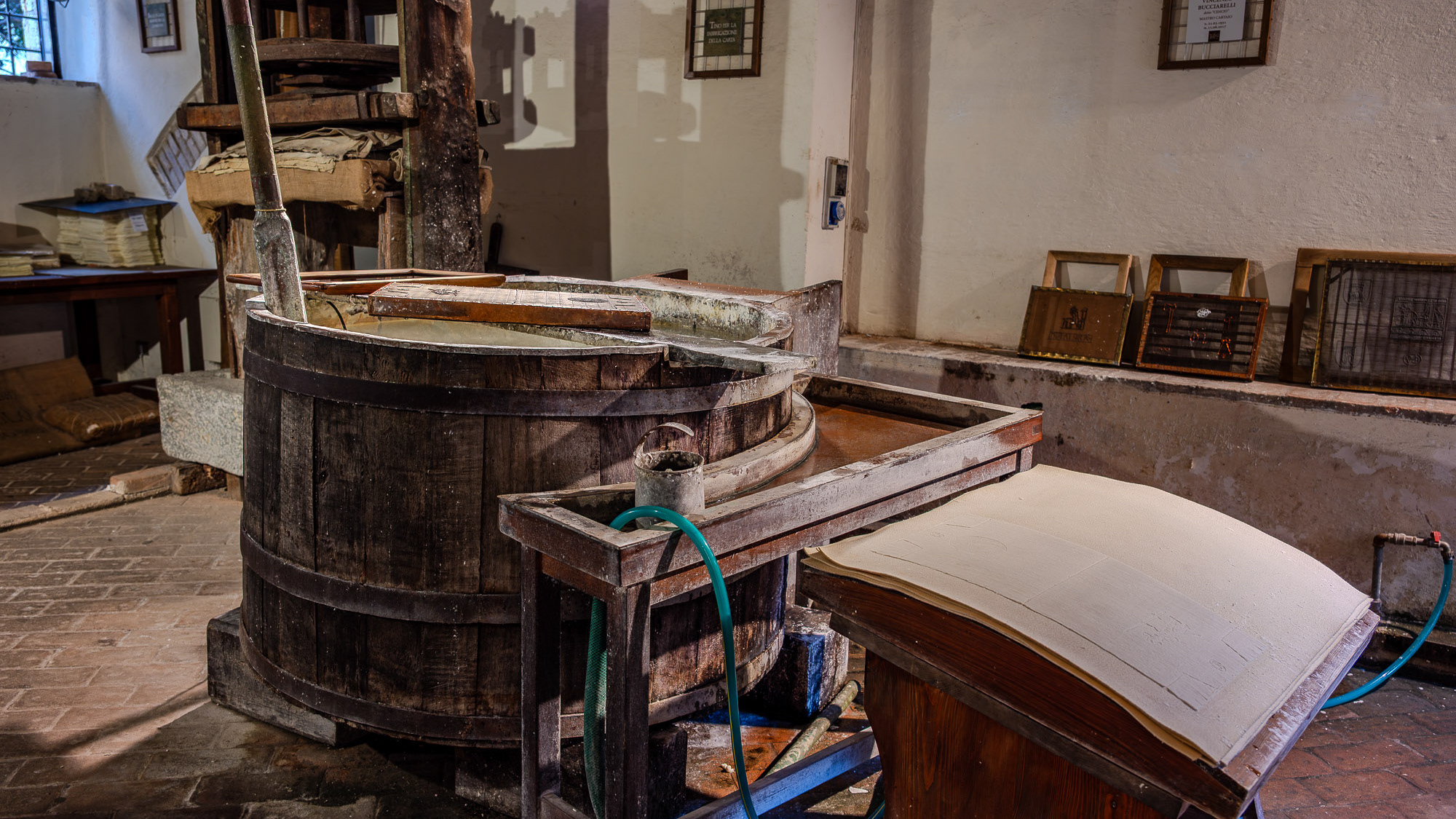
The Fabriano Paper and Watermark Museum is housed in the former Dominican convent. The museum preserves the centuries-old tradition of papermaking that makes Fabriano a unique city in Europe. Inside, there is a faithful reproduction of the medieval fulling mill used for handmade paper. The collection also includes a significant collection of ancient and modern watermarks: during the guided tour, in addition to watching a video on the history of paper, you can watch a demonstration of handmade papermaking by master papermakers. A medieval paper mill has been reconstructed on site, where you can observe the entire production cycle. The rags, cleaned by the "stracciarola," are soaked in the "maceratoio" and reduced to paper pulp by the action of hydraulic piles with multiple hammers. By immersing a special sieve in the "vat" where the paste has been transferred, and shaking it to drain the water, the paste is shaped into sheets, which are then placed on felt and pressed in a press. After drying, the sheets are immersed in a bath of animal gelatin, a process called sizing, which makes them impermeable to ink. Once dried and pressed again, the sheets are ready for use. The museum bookstore offers a wide range of artisanal products made from handmade paper and bound in natural leather. Educational workshops, some lasting several days, are available upon reservation.
2018
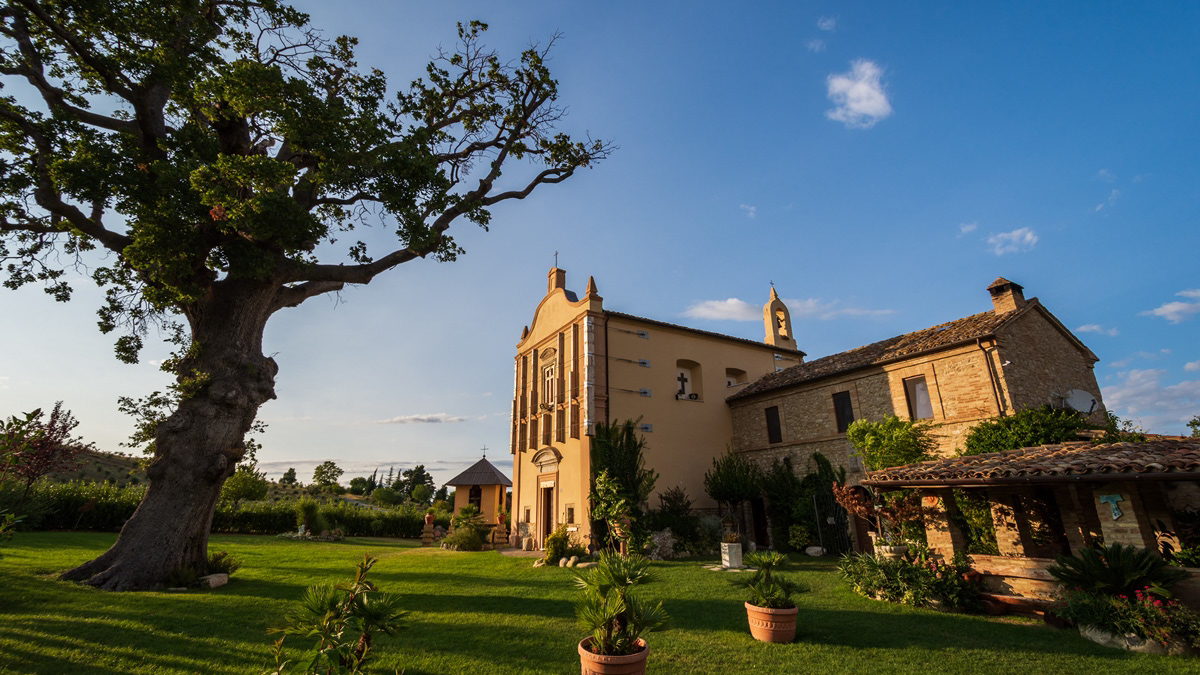
Rotella - Sanctuary of the Madonna della Consolazione
In a small clearing, at the foot of Mount Ascension, there is the Sanctuary of the Madonna della Consolazione or of Montemisio. The Church was built by the monks of Farfa, built on the ruins of a pagan temple dedicated to the goddess Artemis or Artemisia. The cult passed first for the veneration of the Virgin of the Belt, then for the Madonna della Tempera (of the water needed for the fields). A legend tells that, while the drought threatened the crops, a propitiatory procession was held. The statue of the Madonna had just set off, when the sky darkened and the beneficial rain fell. In the 18th century, after the restoration, the church became a place of worship for the Madonna della Consolazione. Today the sanctuary is the destination of numerous pilgrimages. The traditional festival takes place on August 15th. The chapel has a single nave, a terracotta floor and a travertine altar. In the garden stands a centuries-old oak tree over 23 meters high, with a circumference greater than 5 meters.
2022
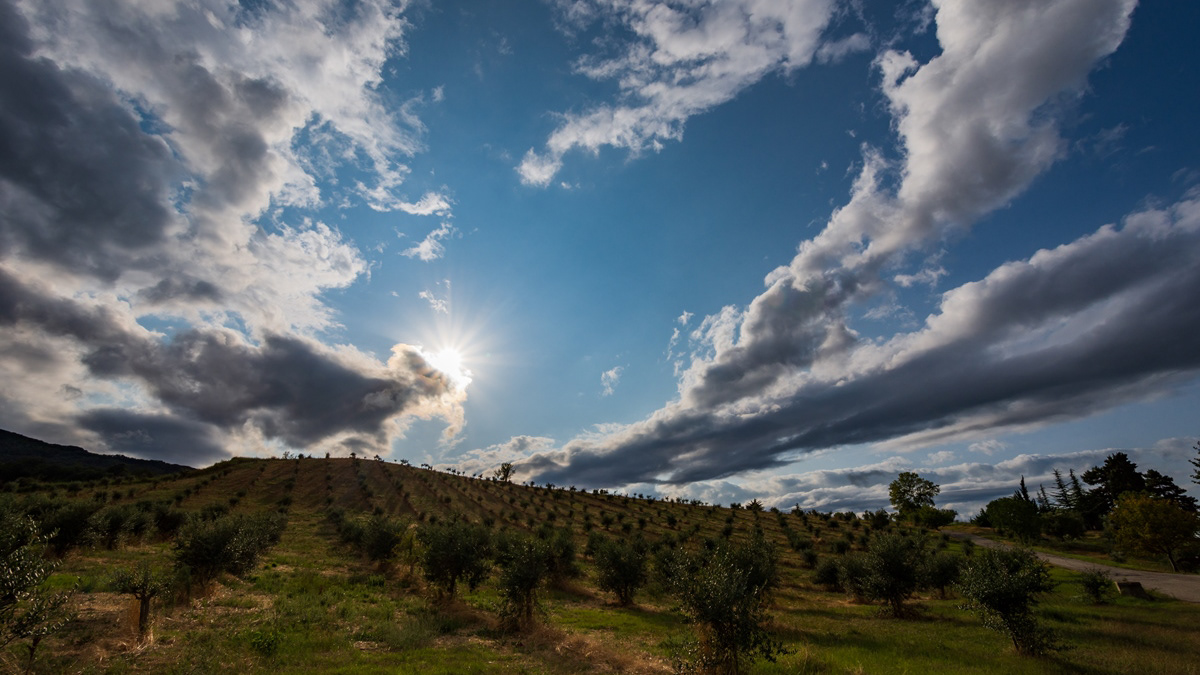
Wonderful view of the Marche hills
The Marche, a region of eastern Italy, rises between the Apennine mountains and the Adriatic Sea.
2022
Recanati. Church of S. Anna
Built in 1400 and rebuilt in 1700. In it there is a faithful reproduction of the Holy House of Loreto as it was before the fire of 1921 and an ancient image of the Madonna.
2022
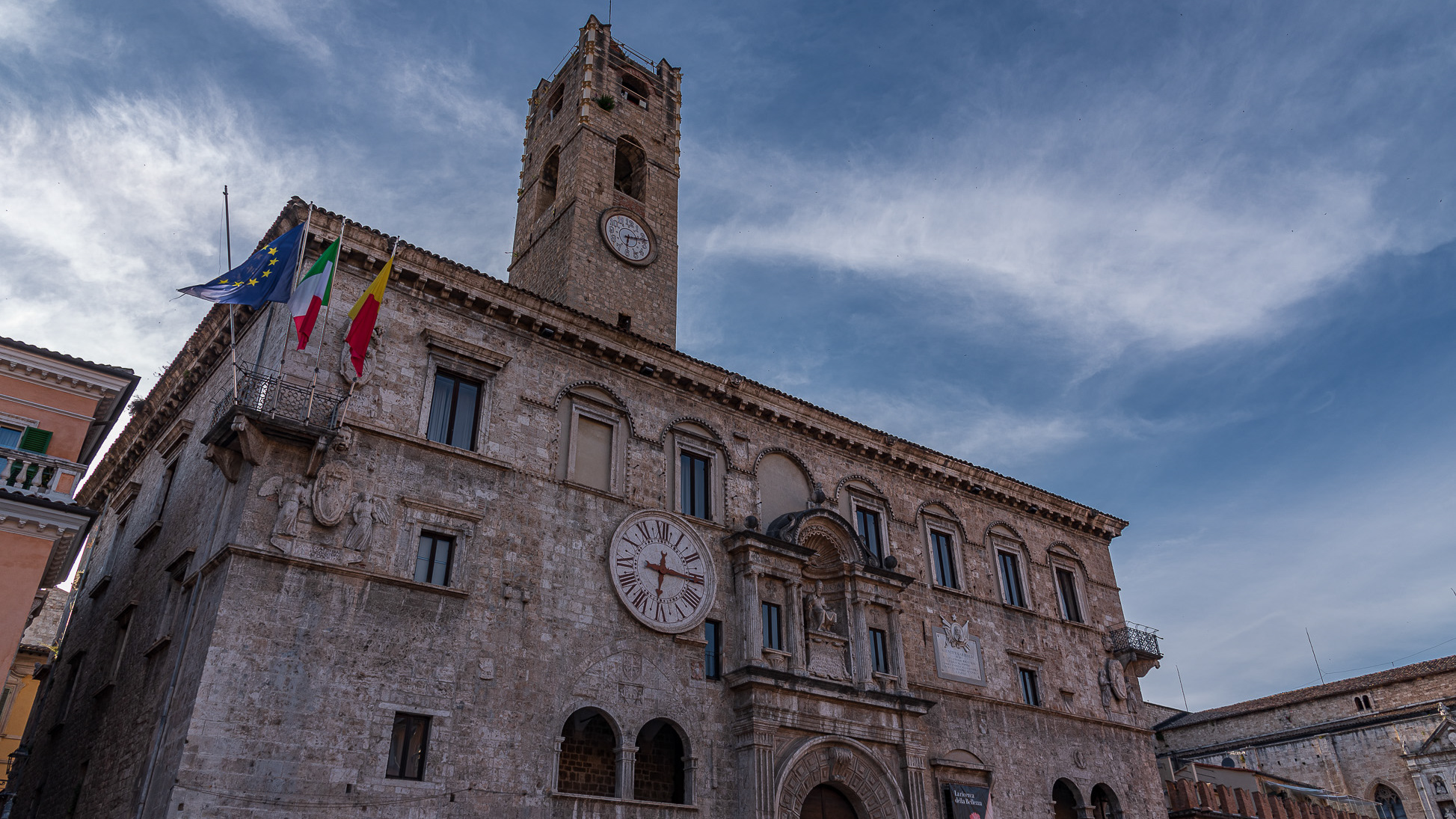
Ascoli Piceno. The Palazzo dei Capitani del Popolo
Overlooking Piazza del Popolo, it stands out for its elegant medieval crenellated tower next to the historic Meletti café. Built between the 13th and 14th centuries from the union of three small buildings separated by two rue, one of which was equipped with a tower which was later reused, it was remodeled following the fire that almost entirely destroyed the interior in 1535. The central portal, preceded by a staircase and surmounted by the monument to Paul III, the courtyard with three orders of loggias and the staircase, the latter built by Camillo Merli around 1550, date back to that period.
Back to Top