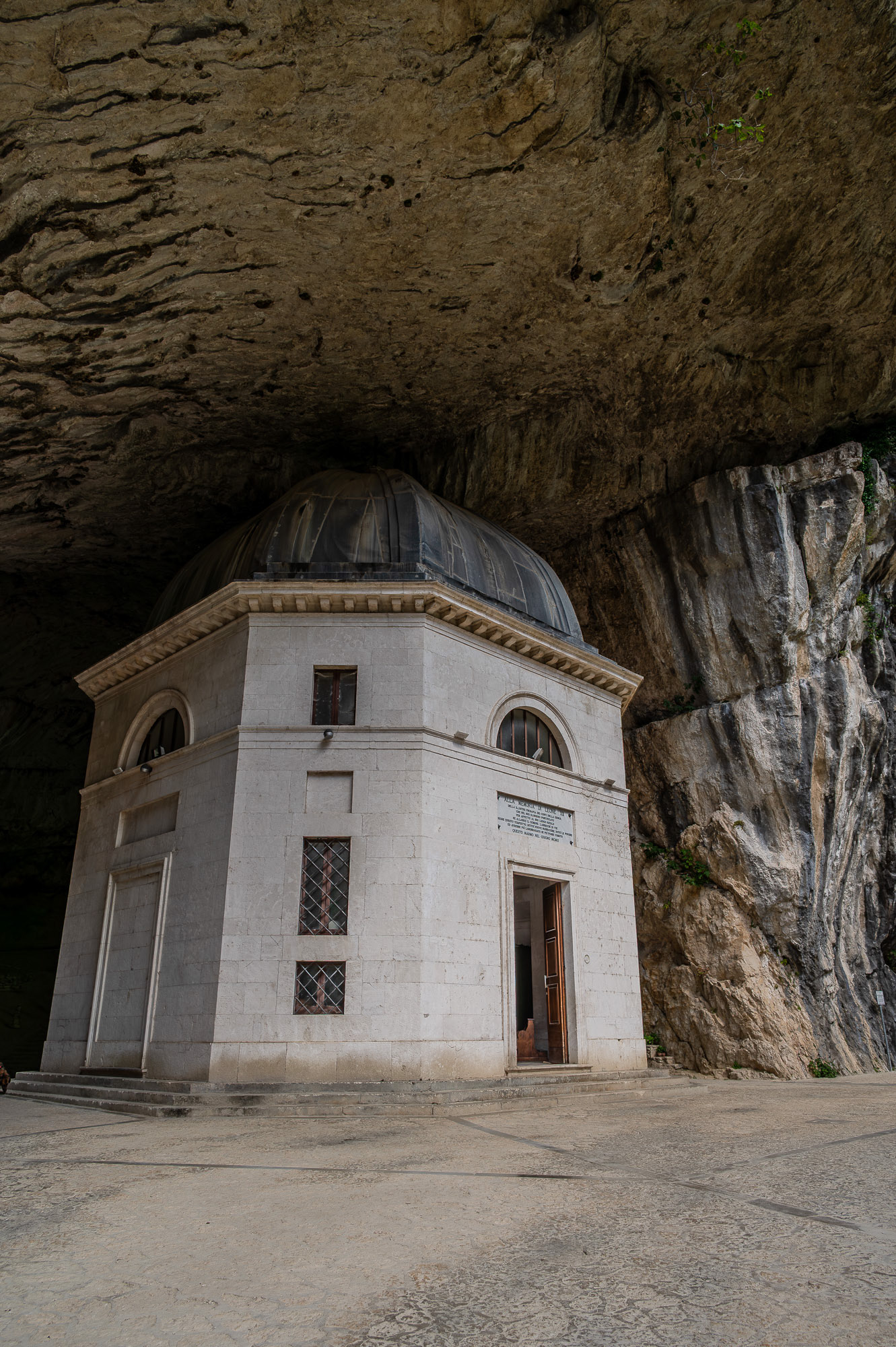
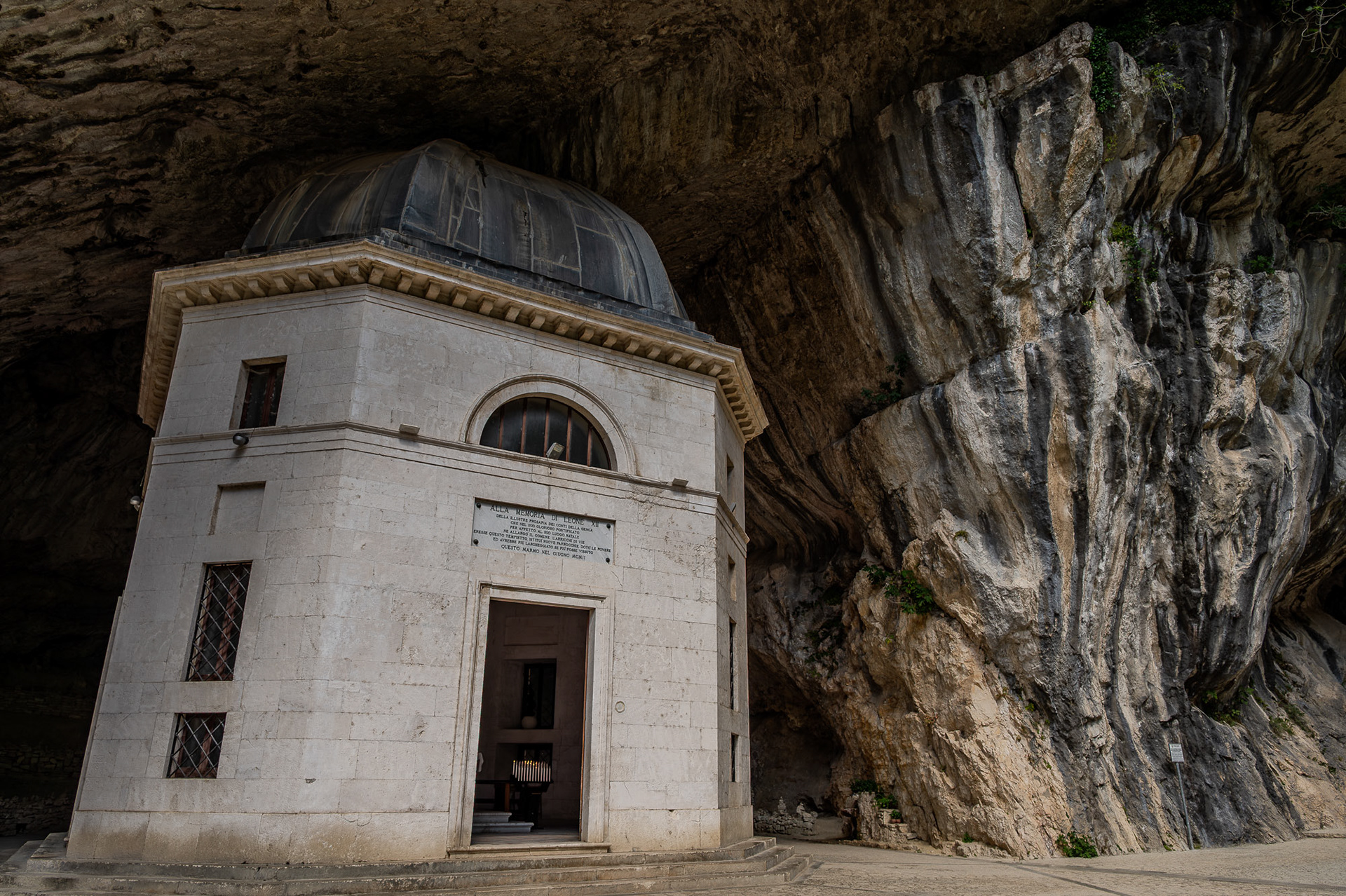
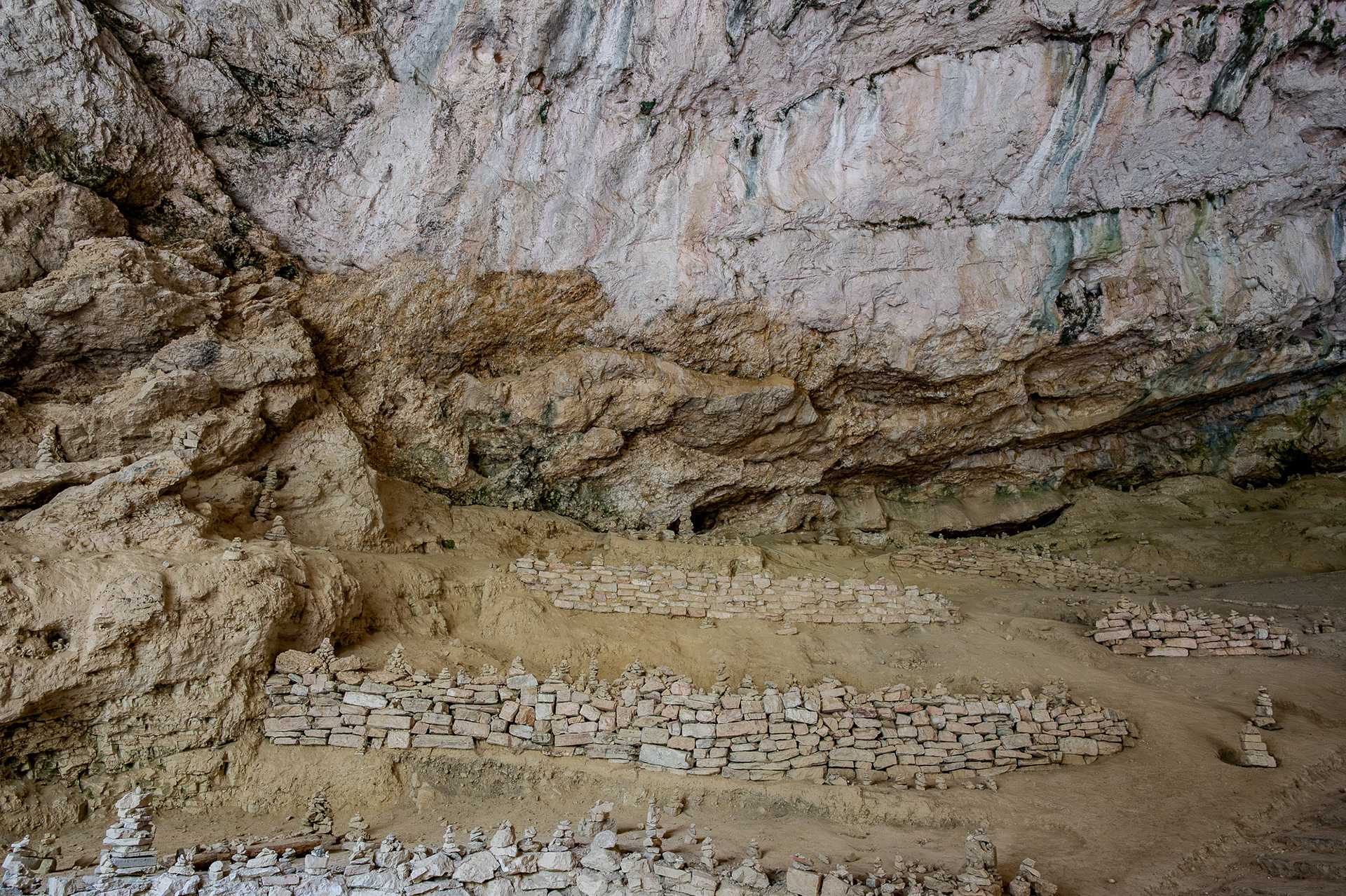
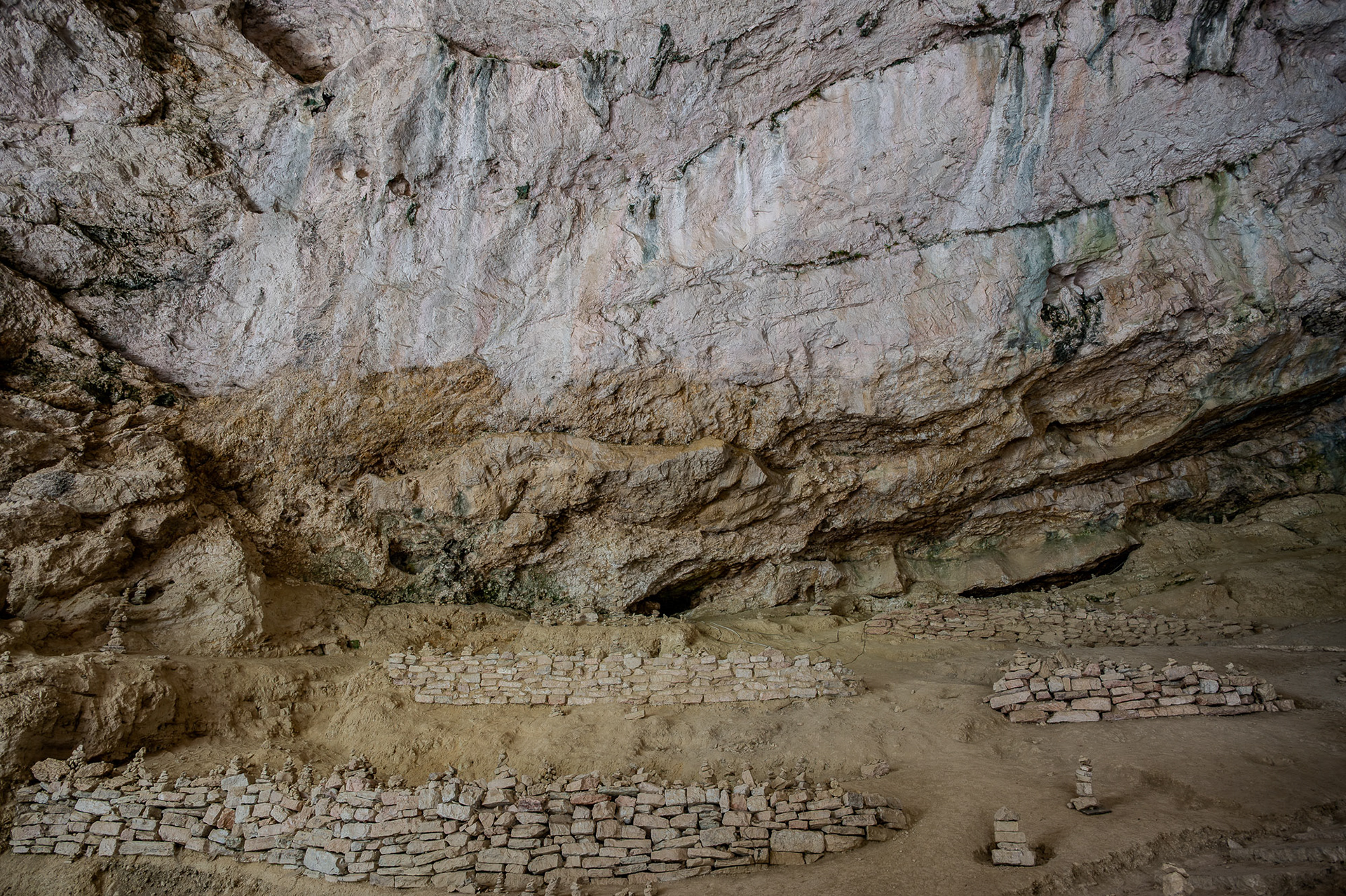
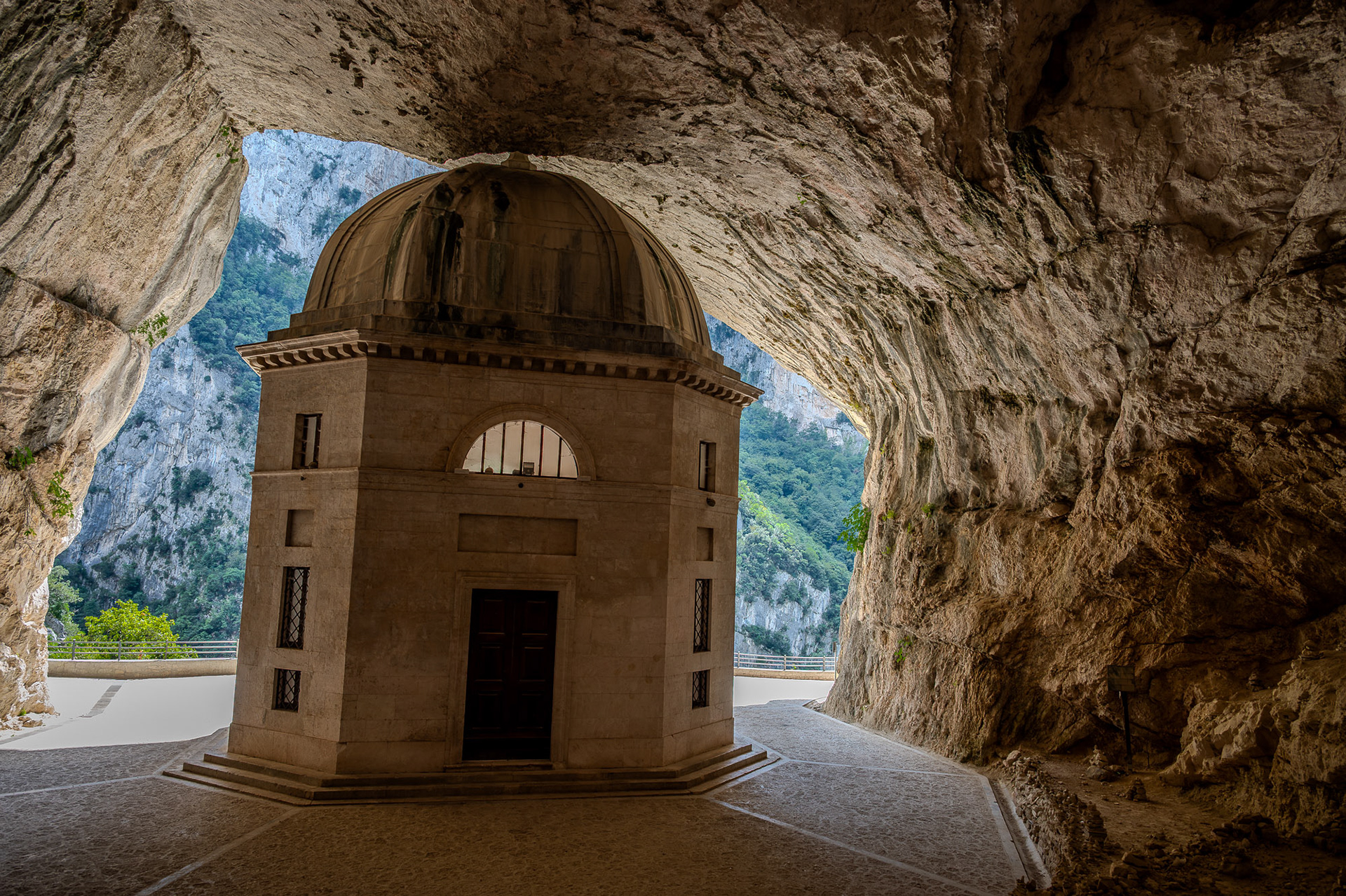
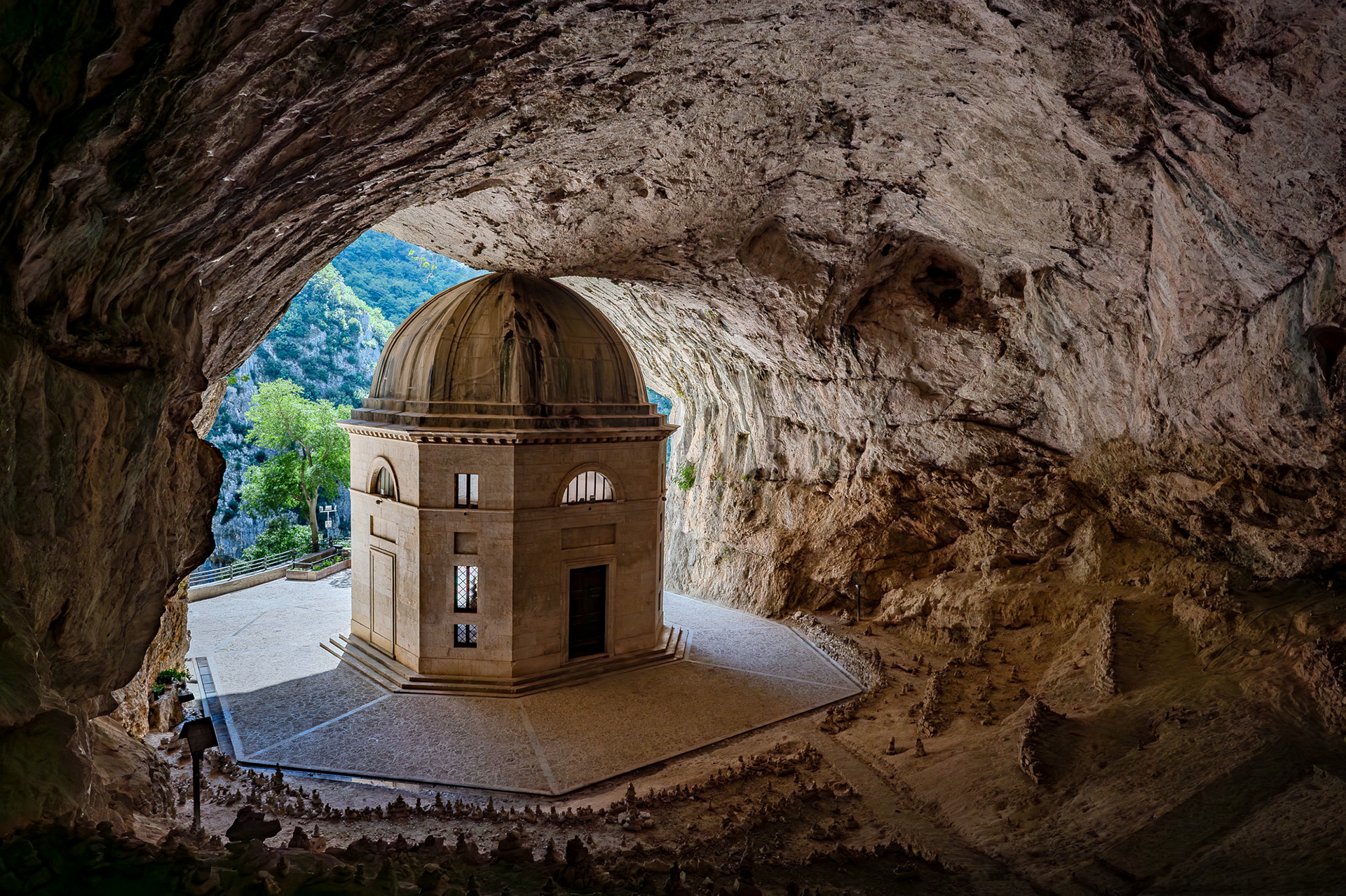
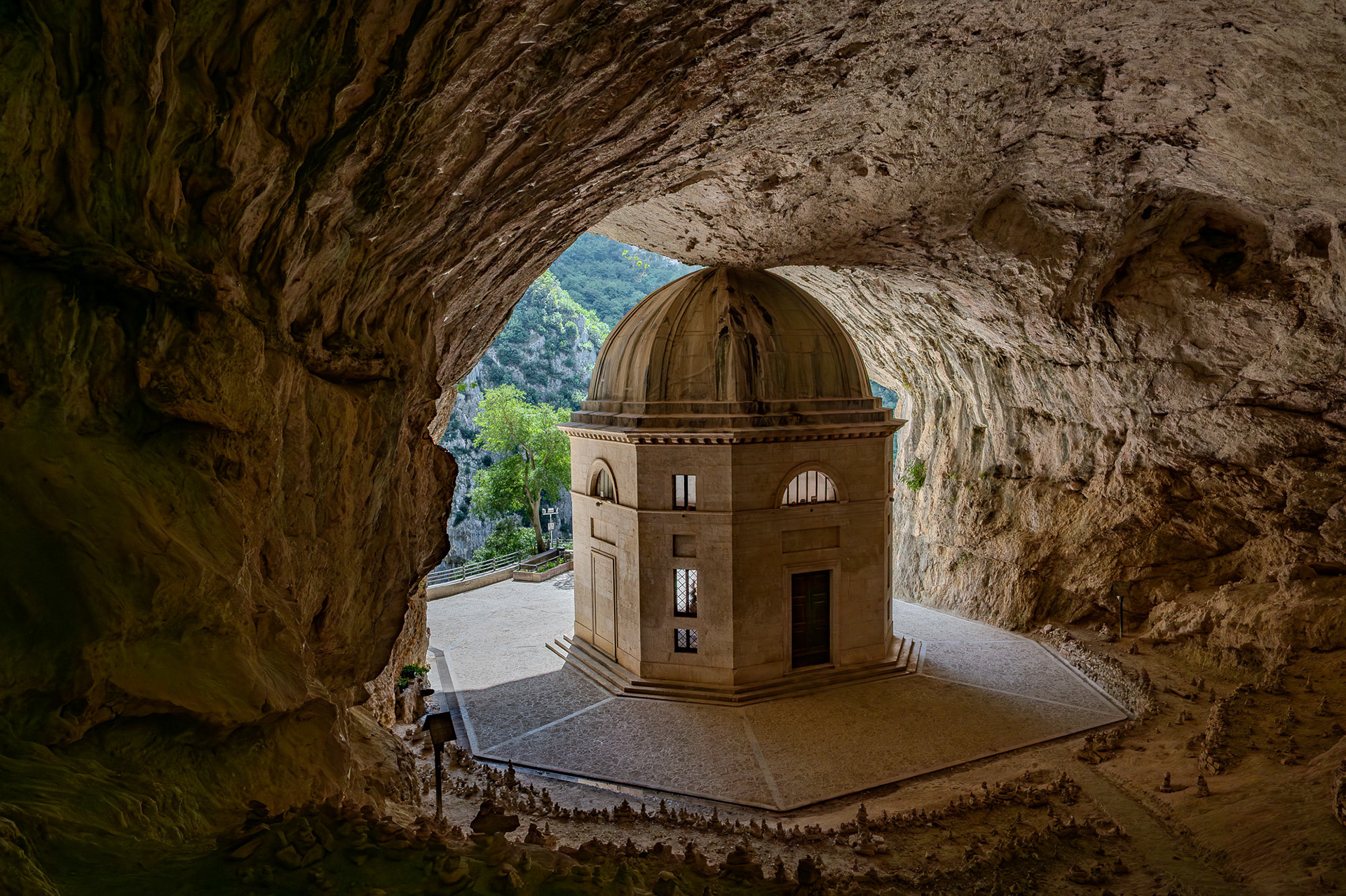
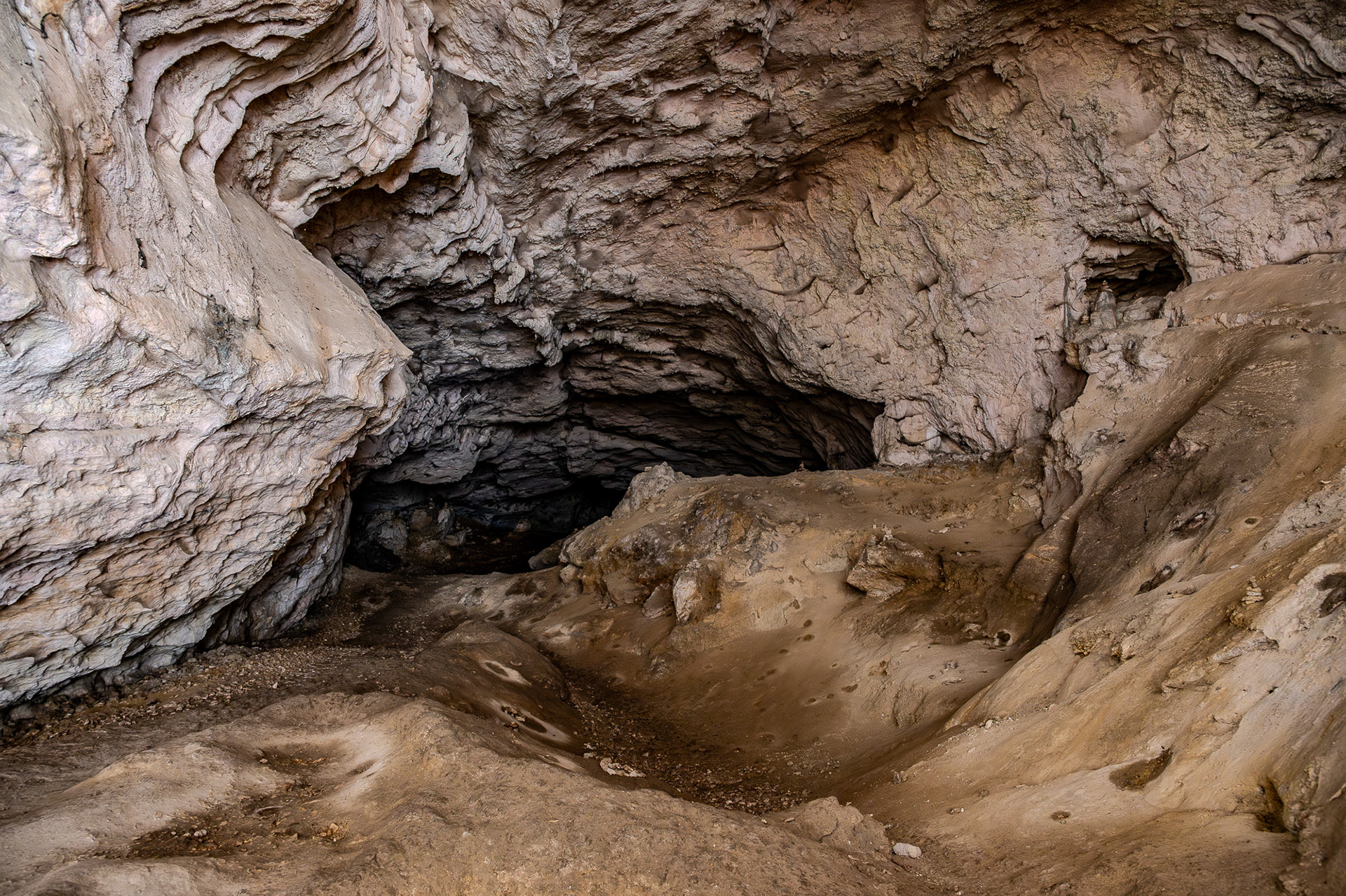
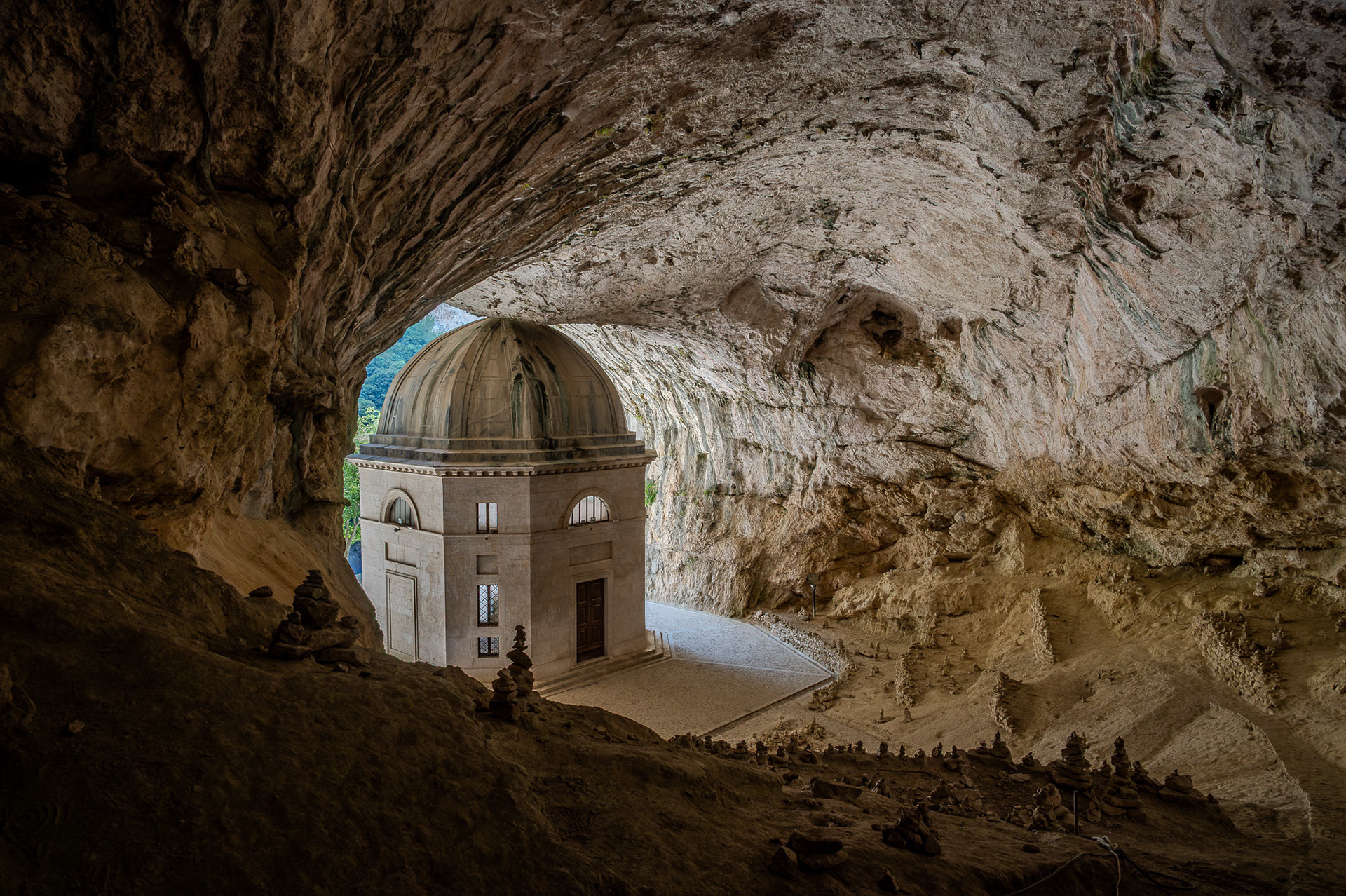
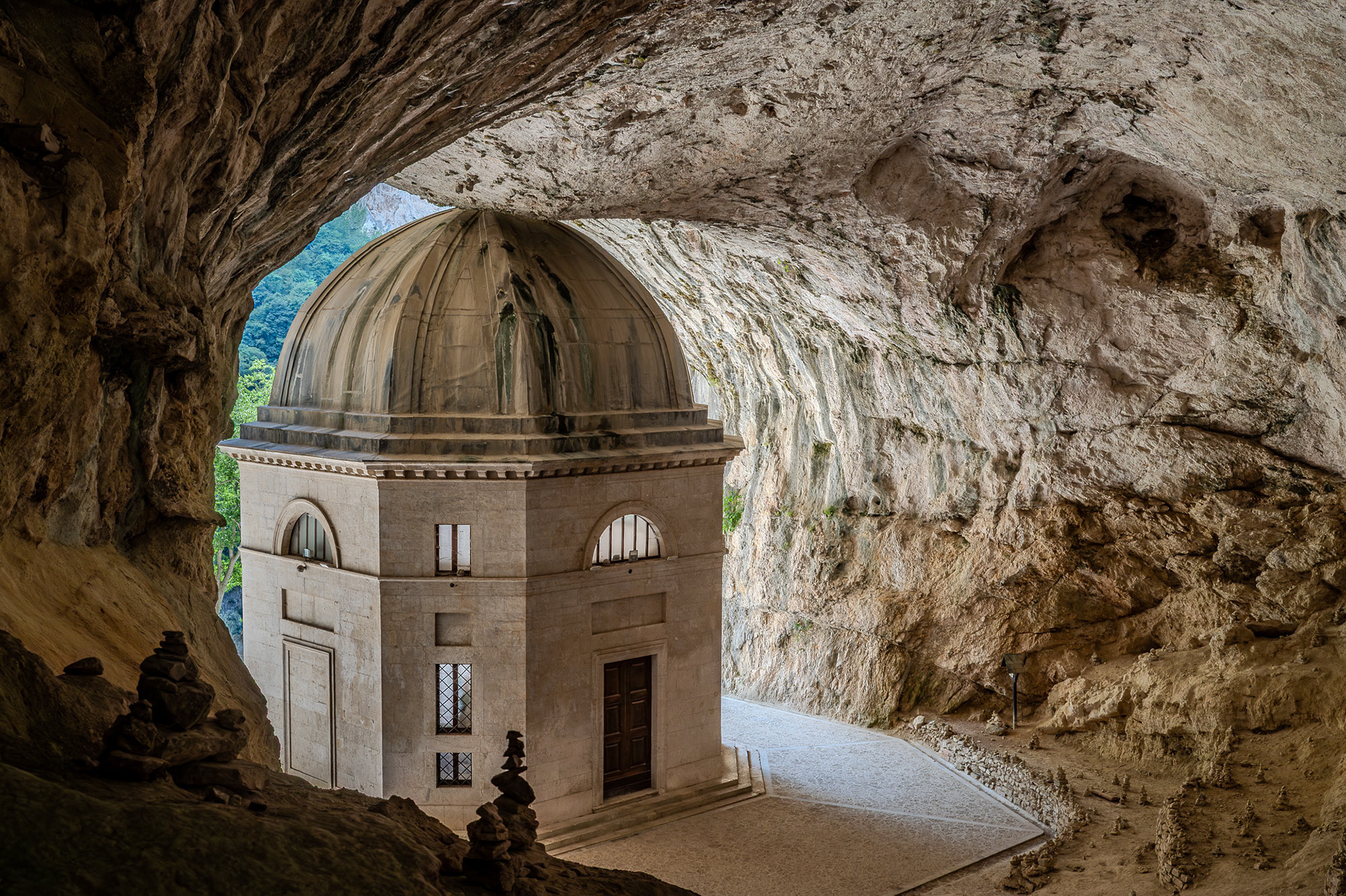
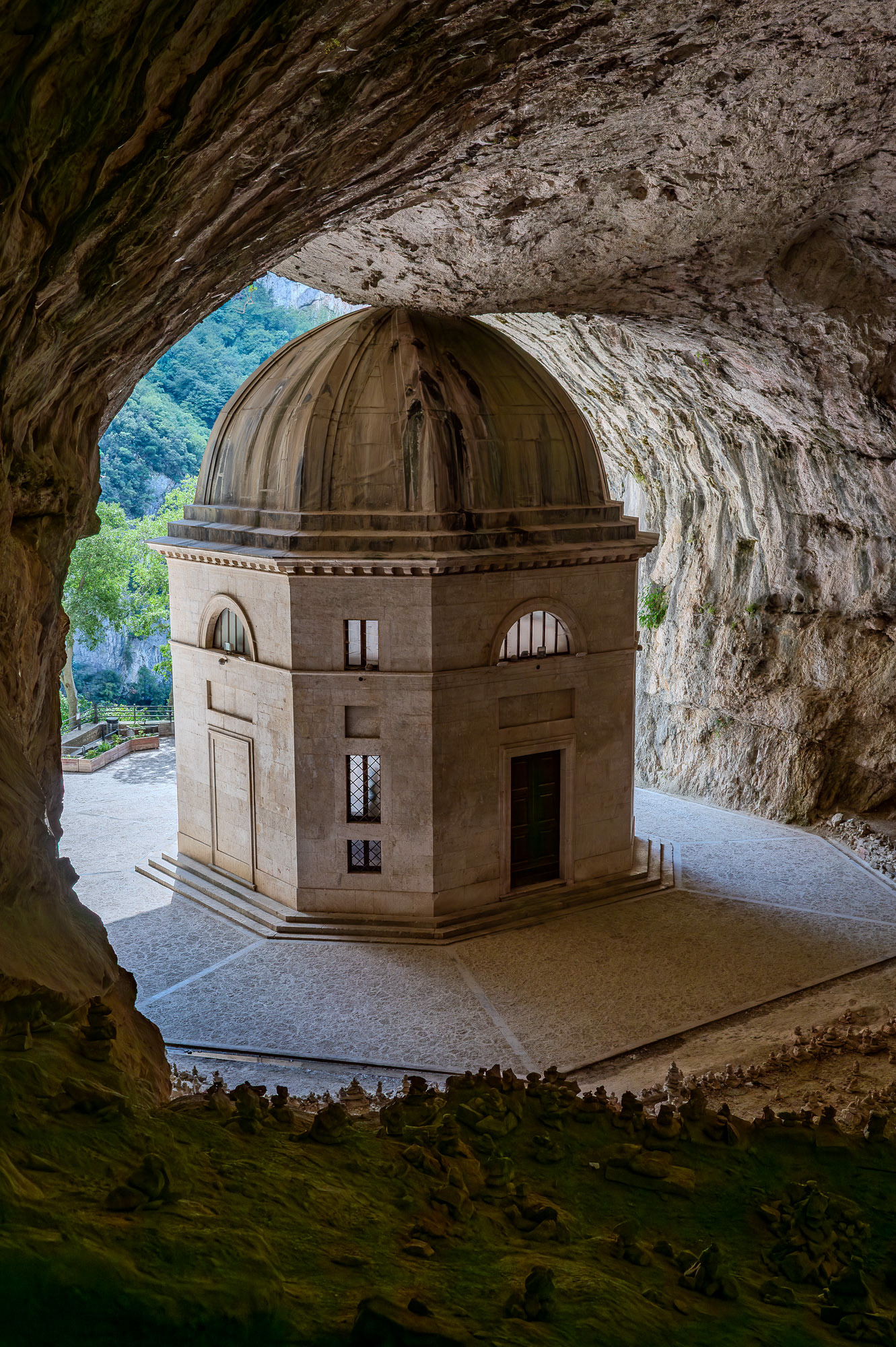
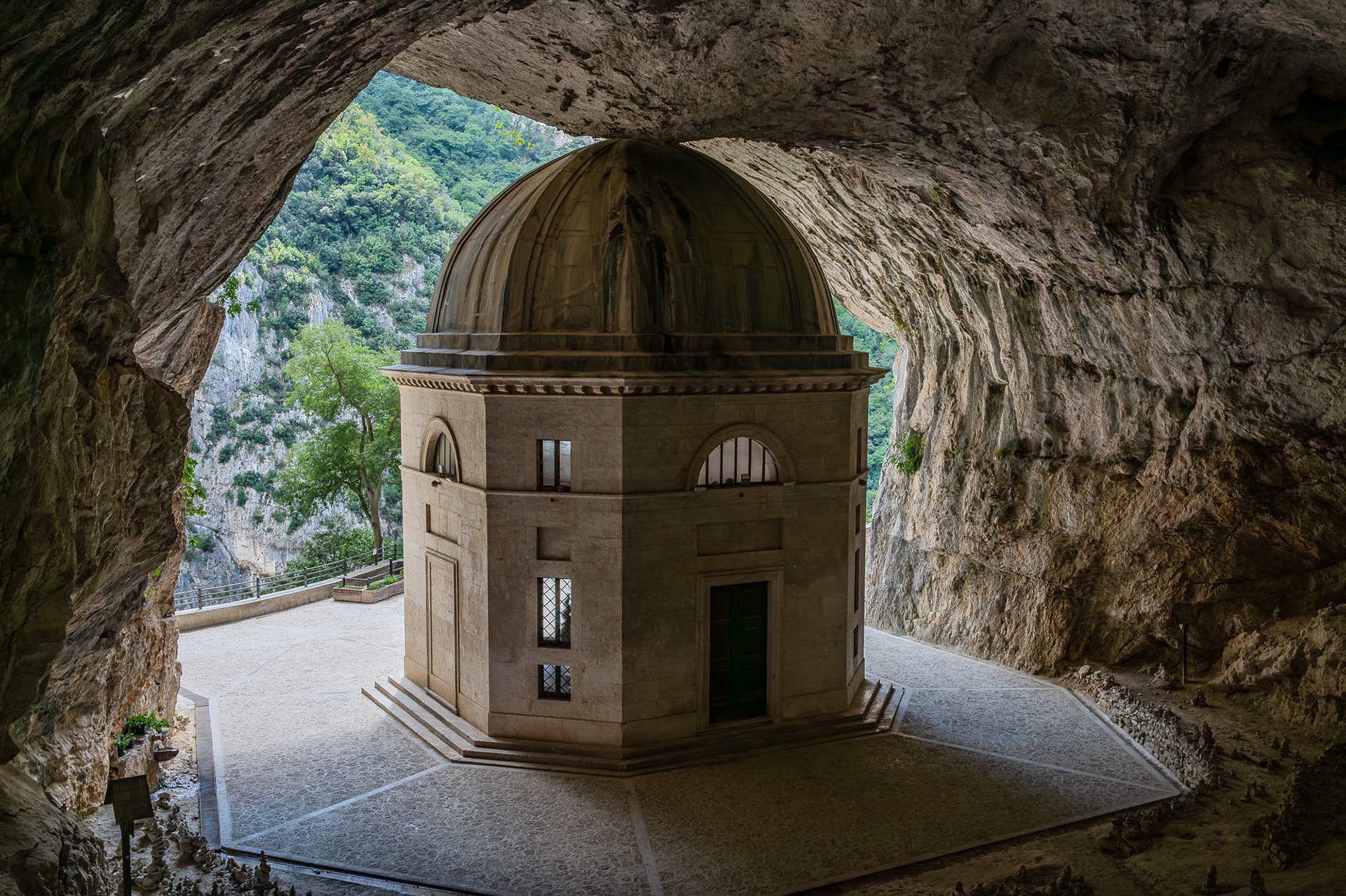
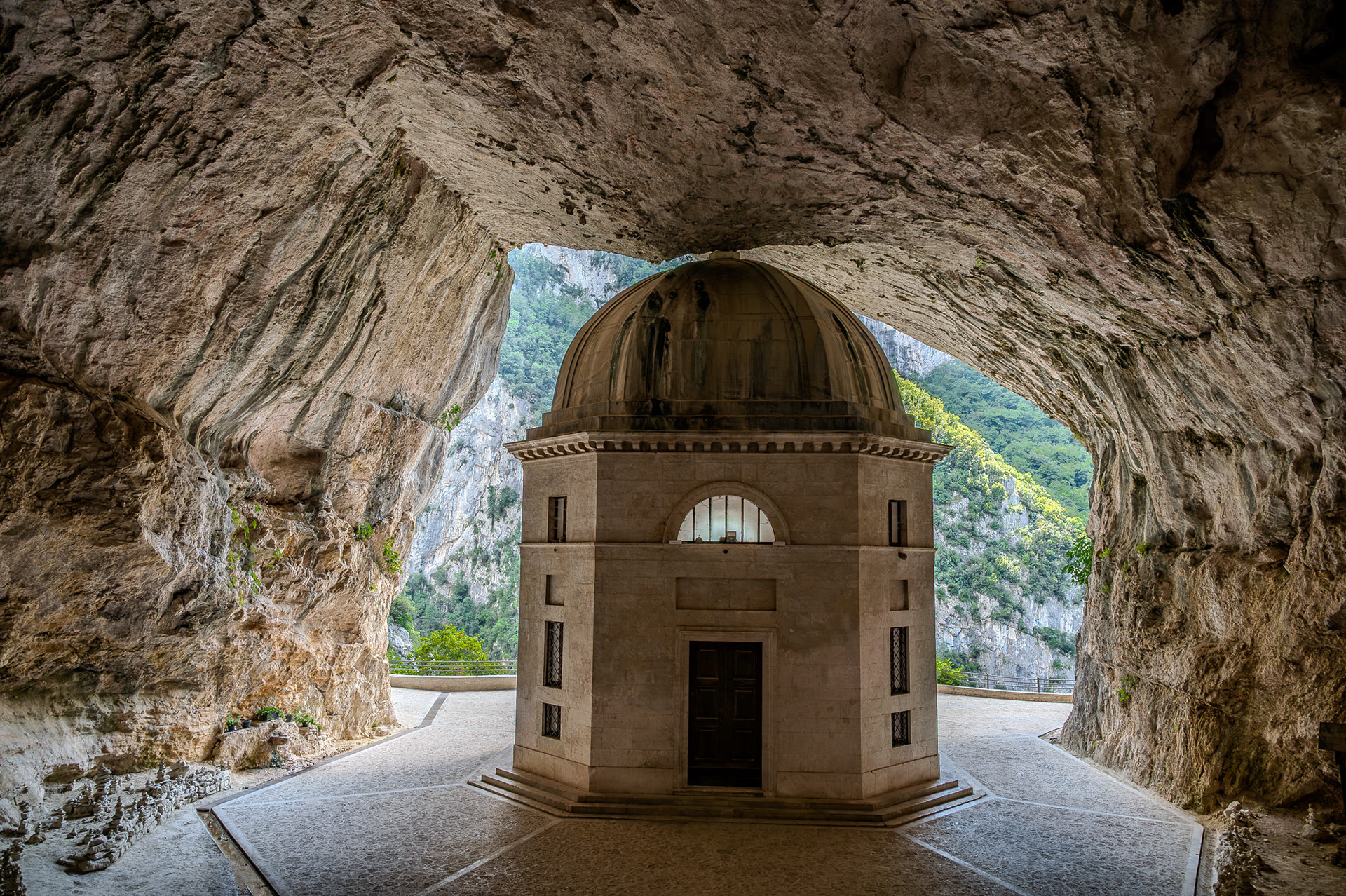
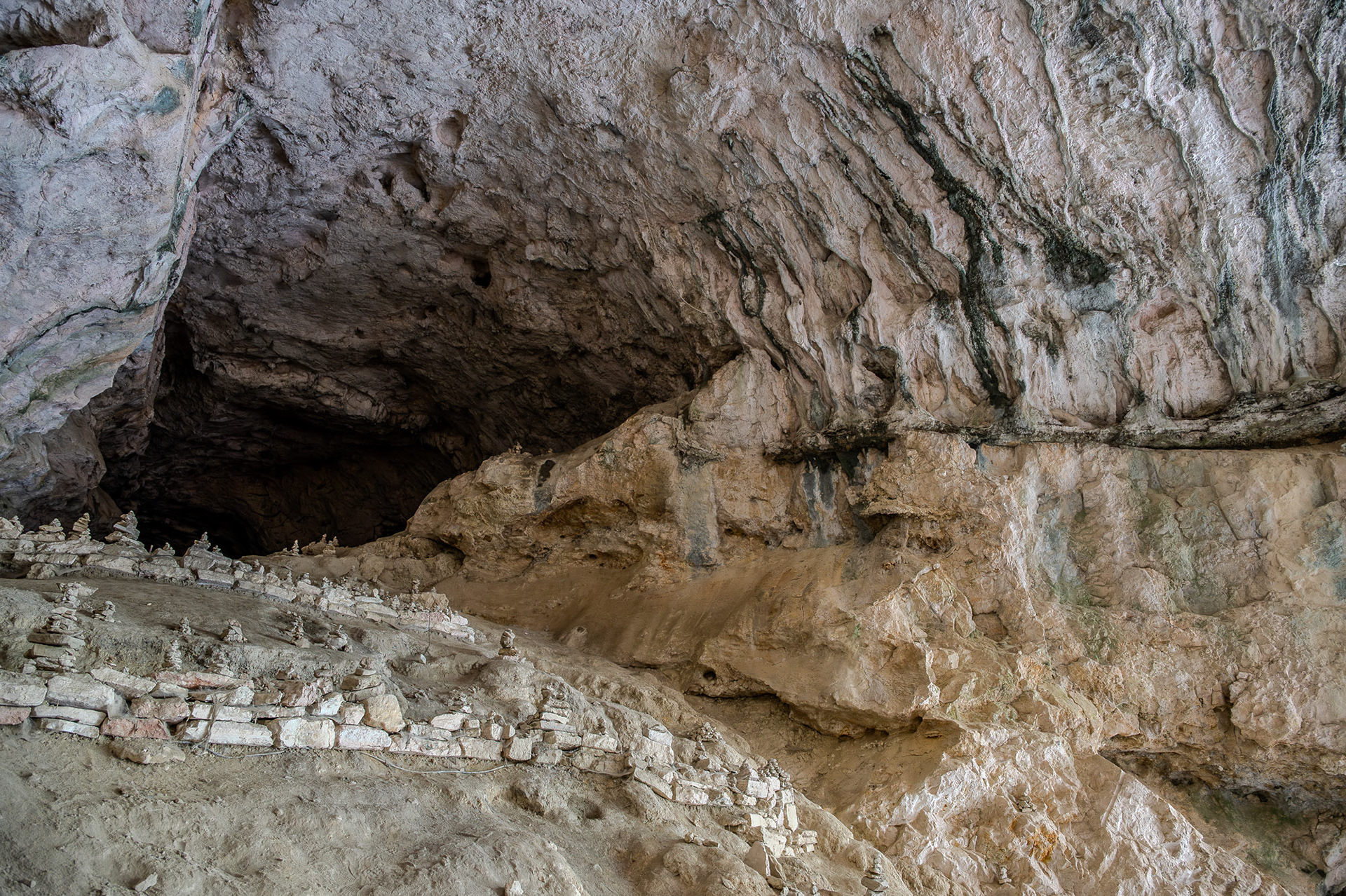
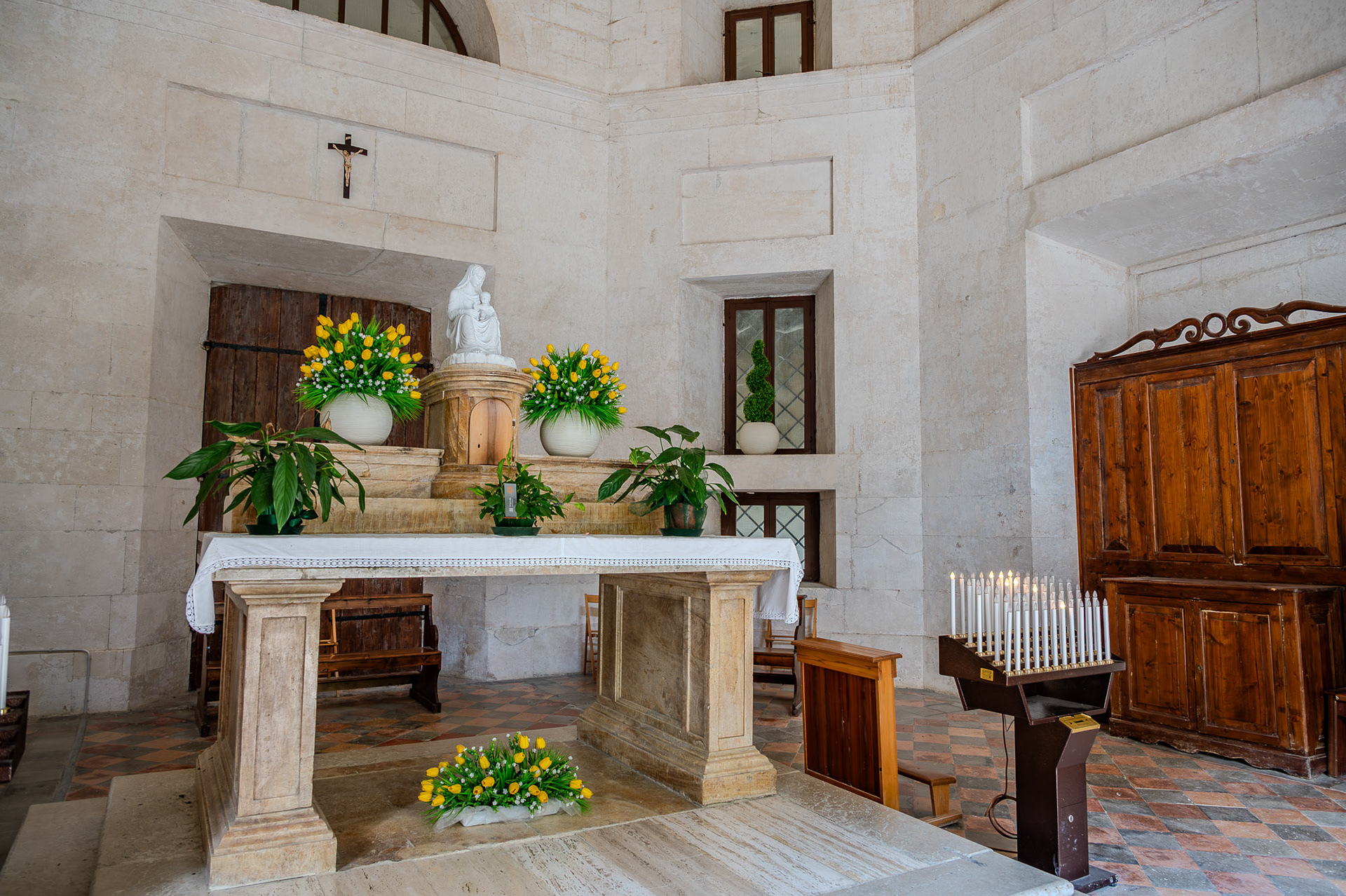
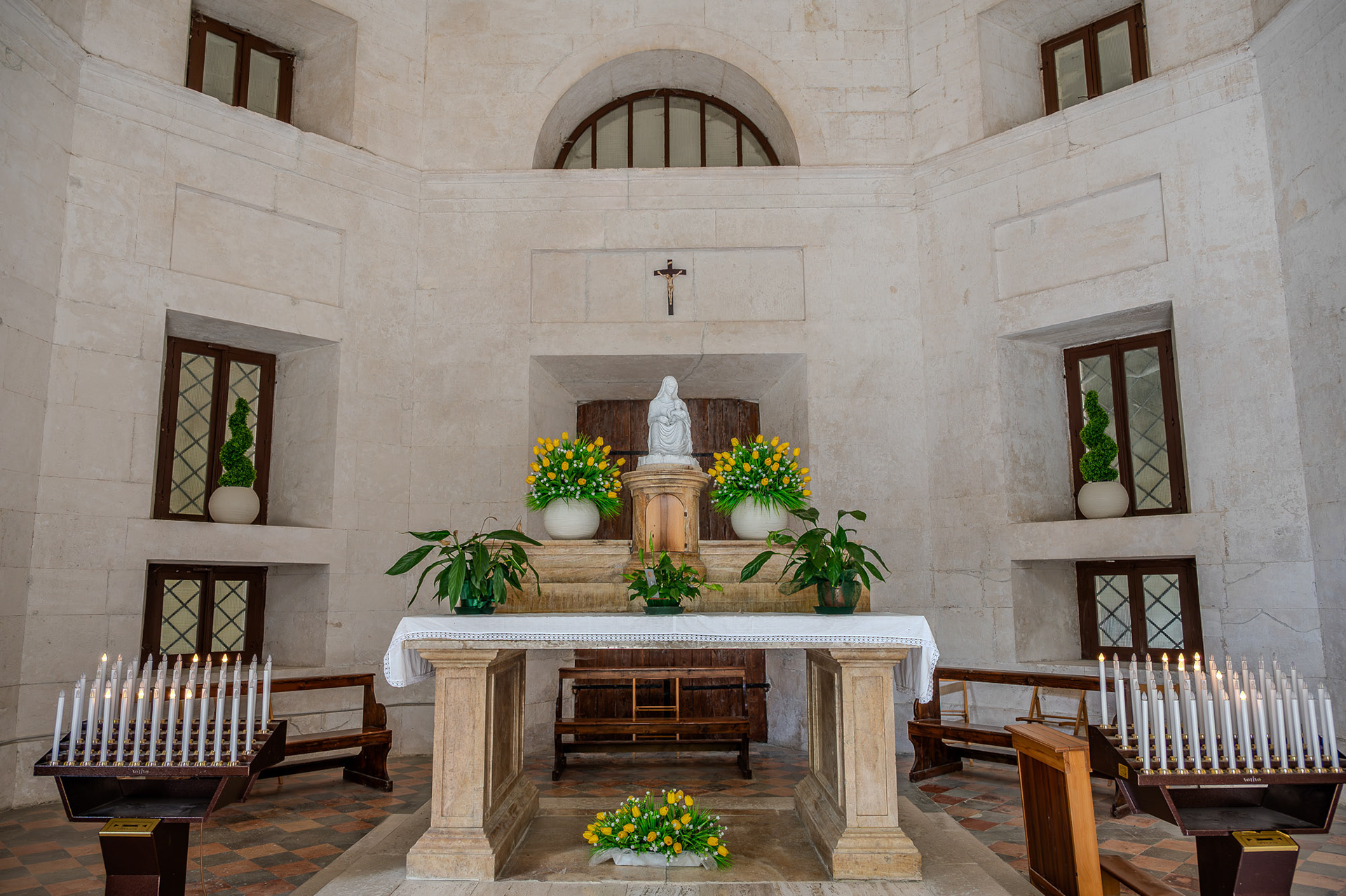
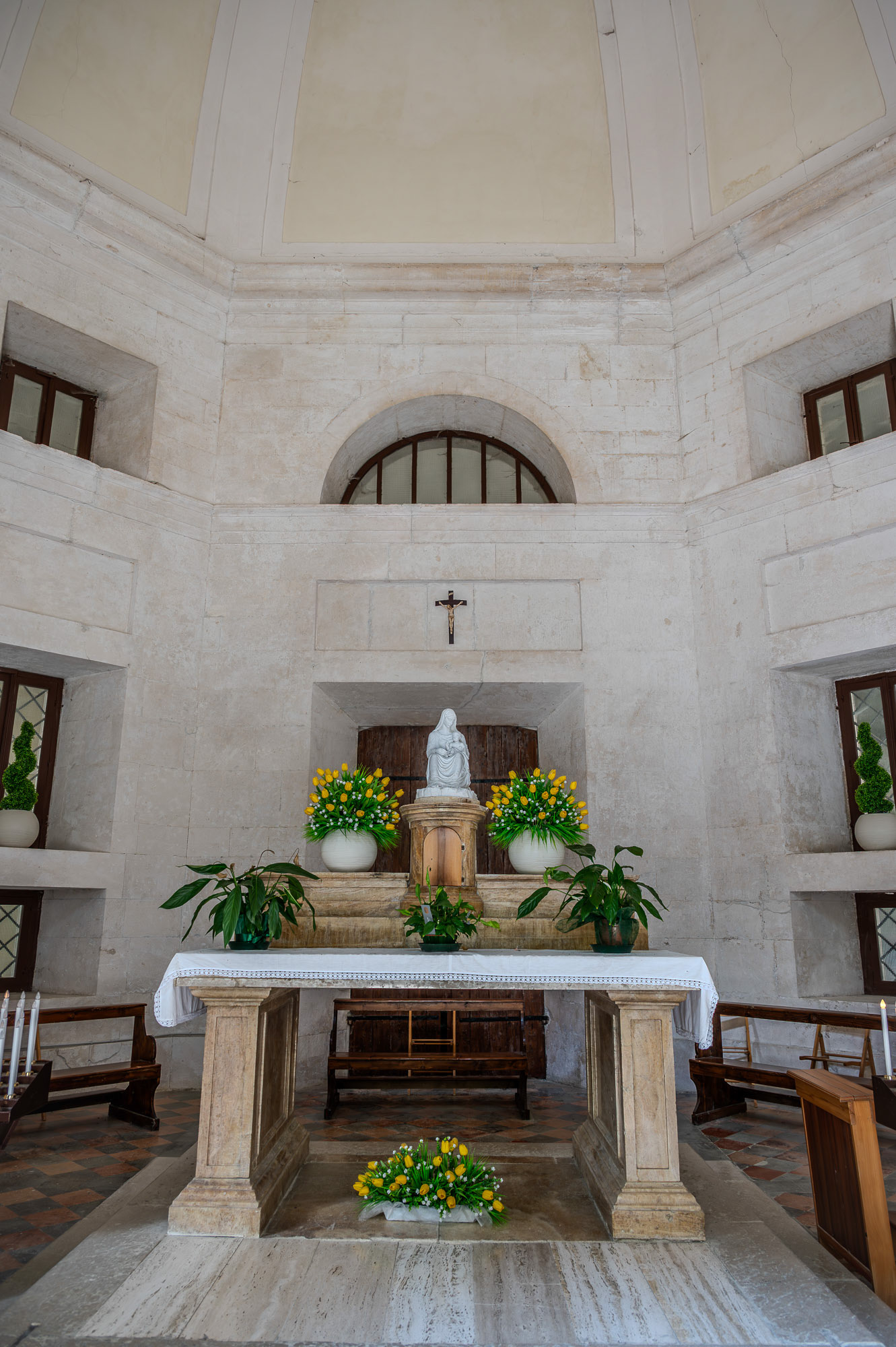
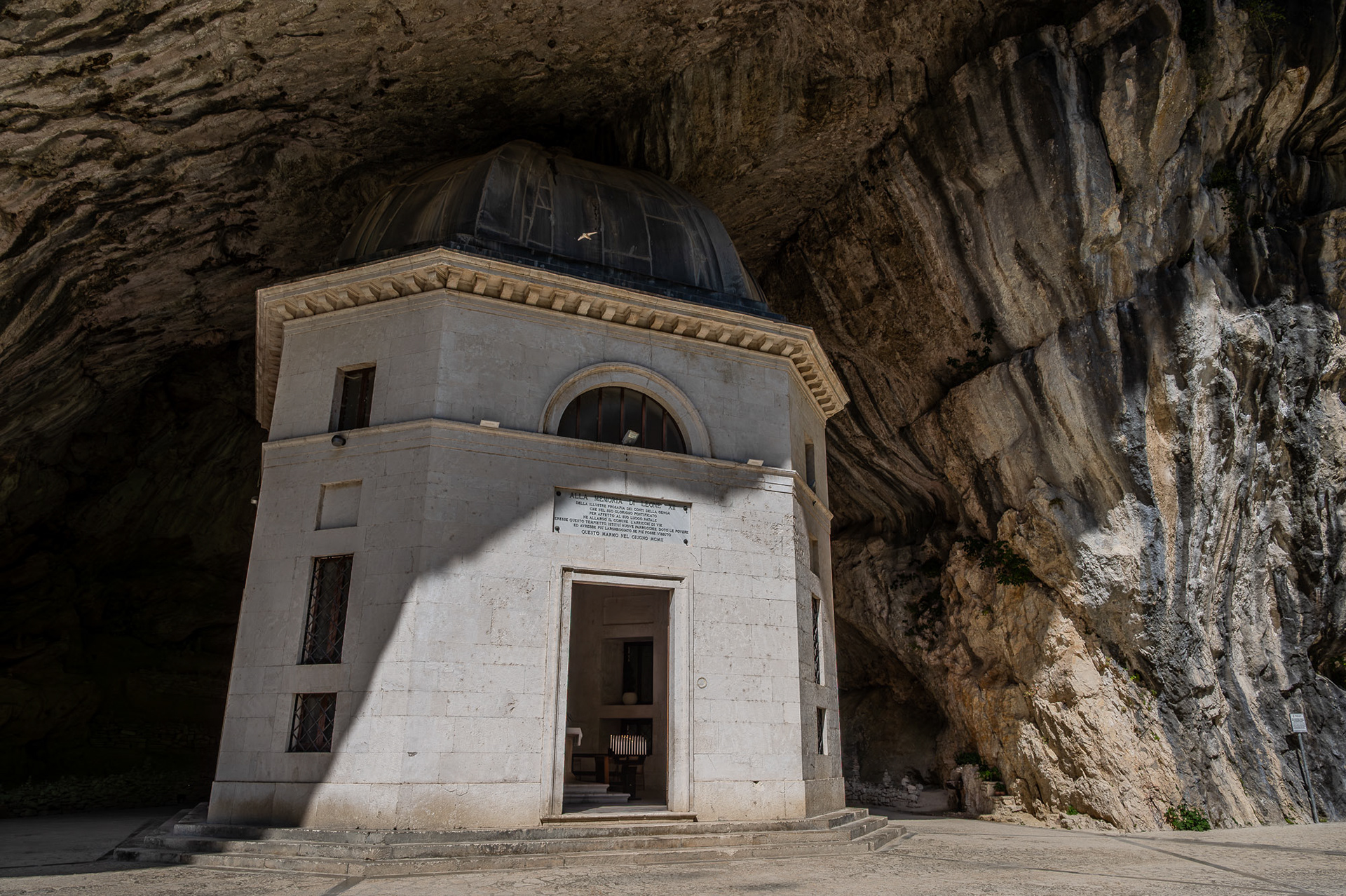
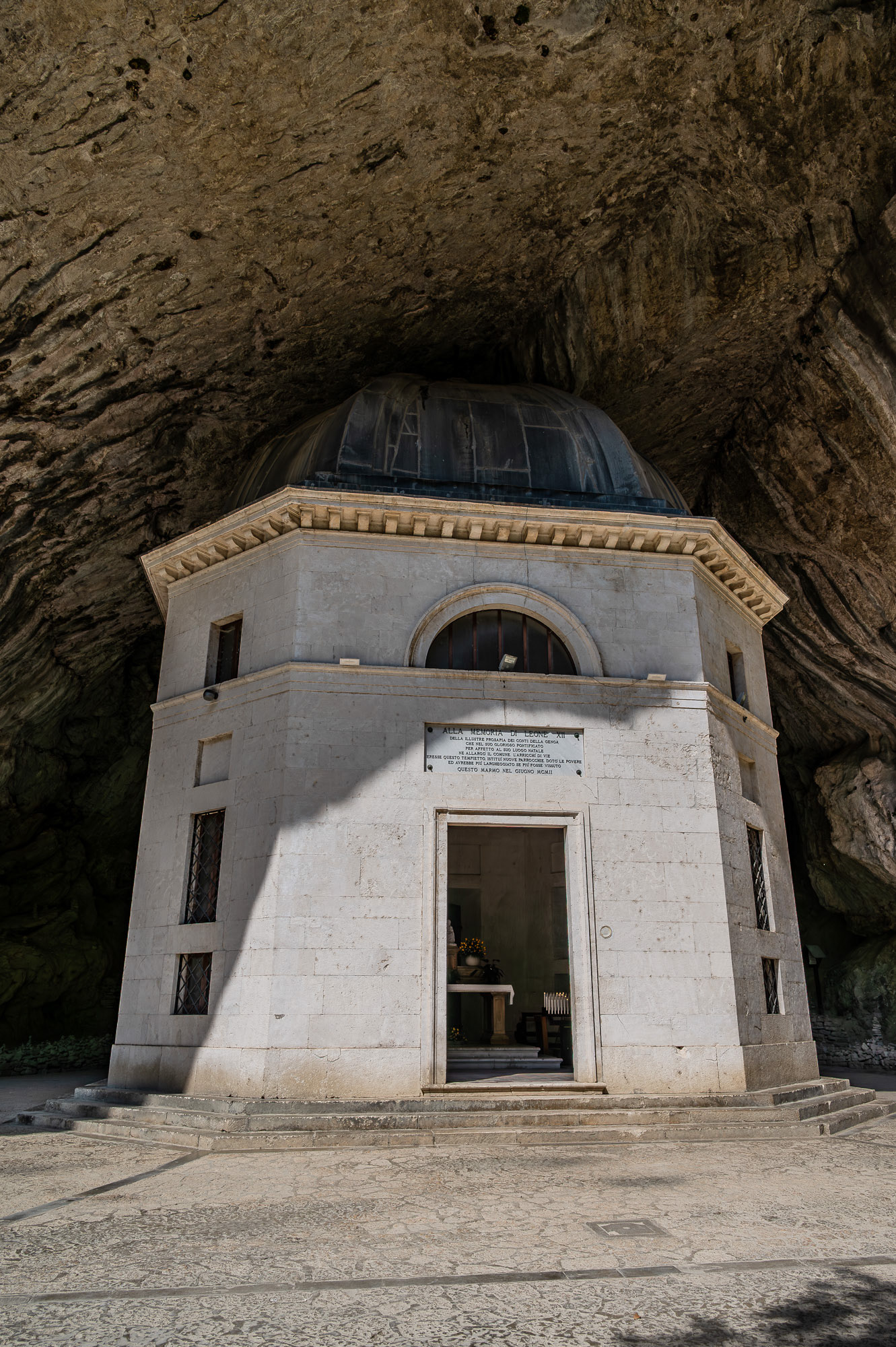
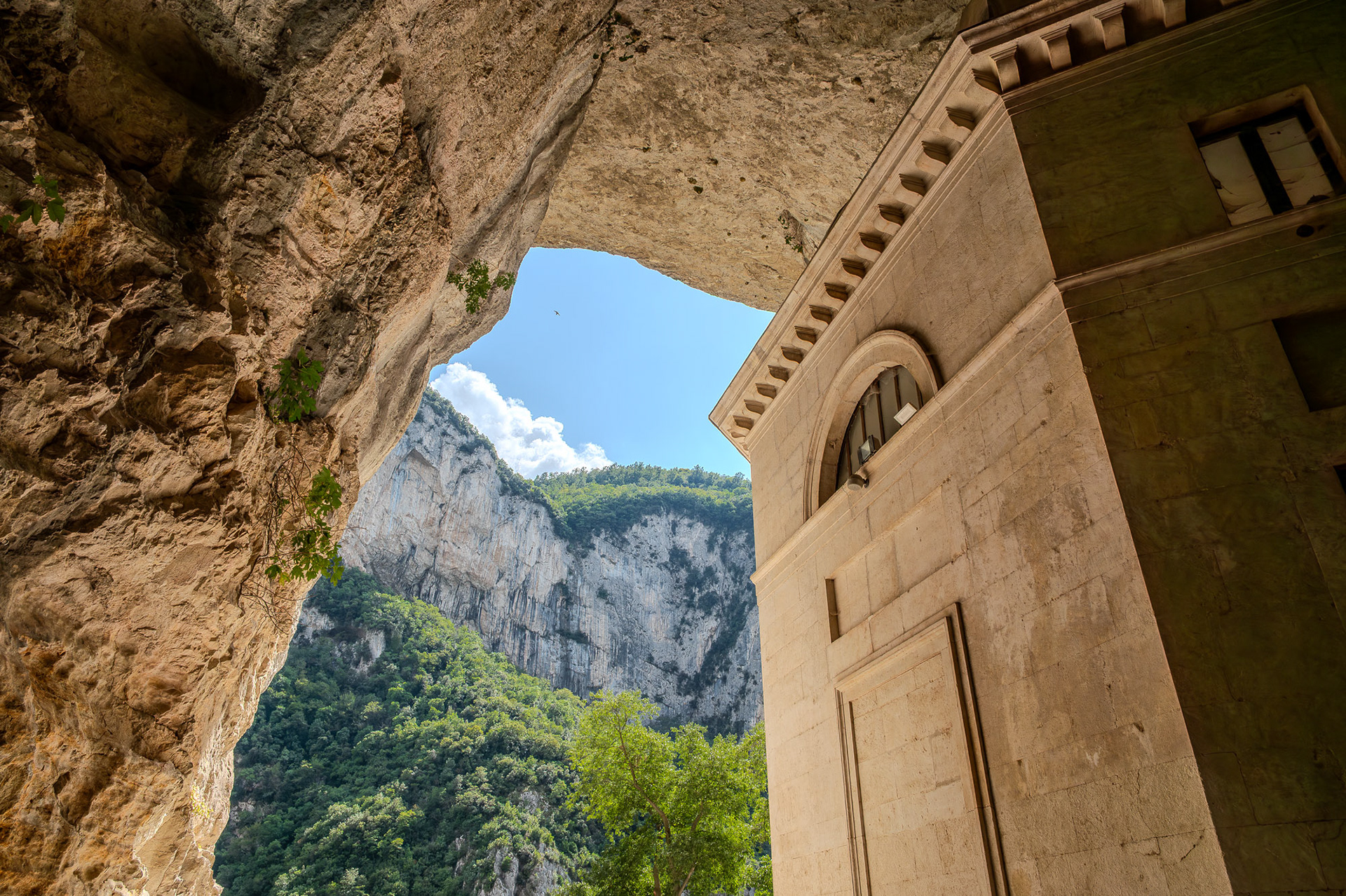
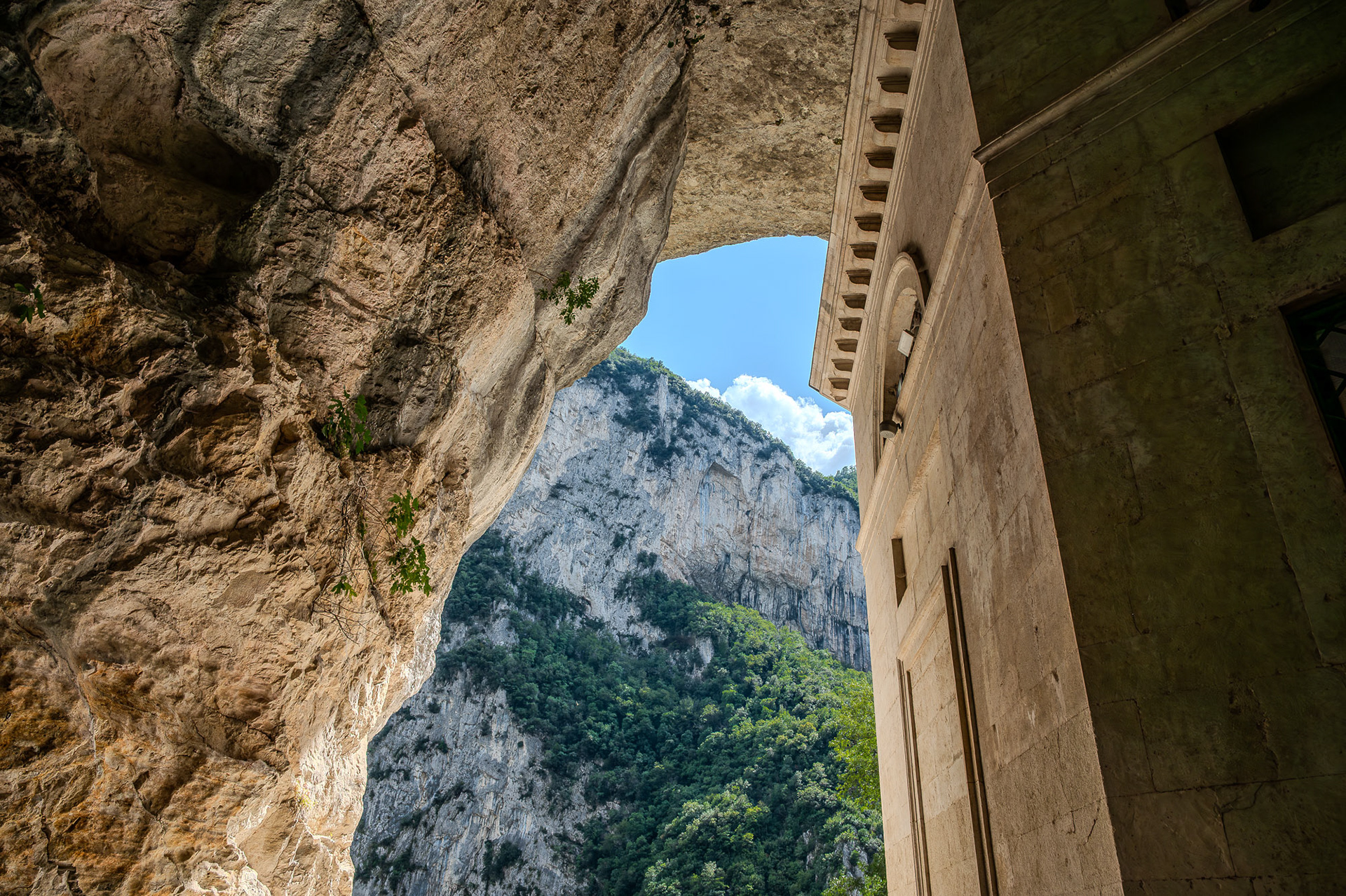
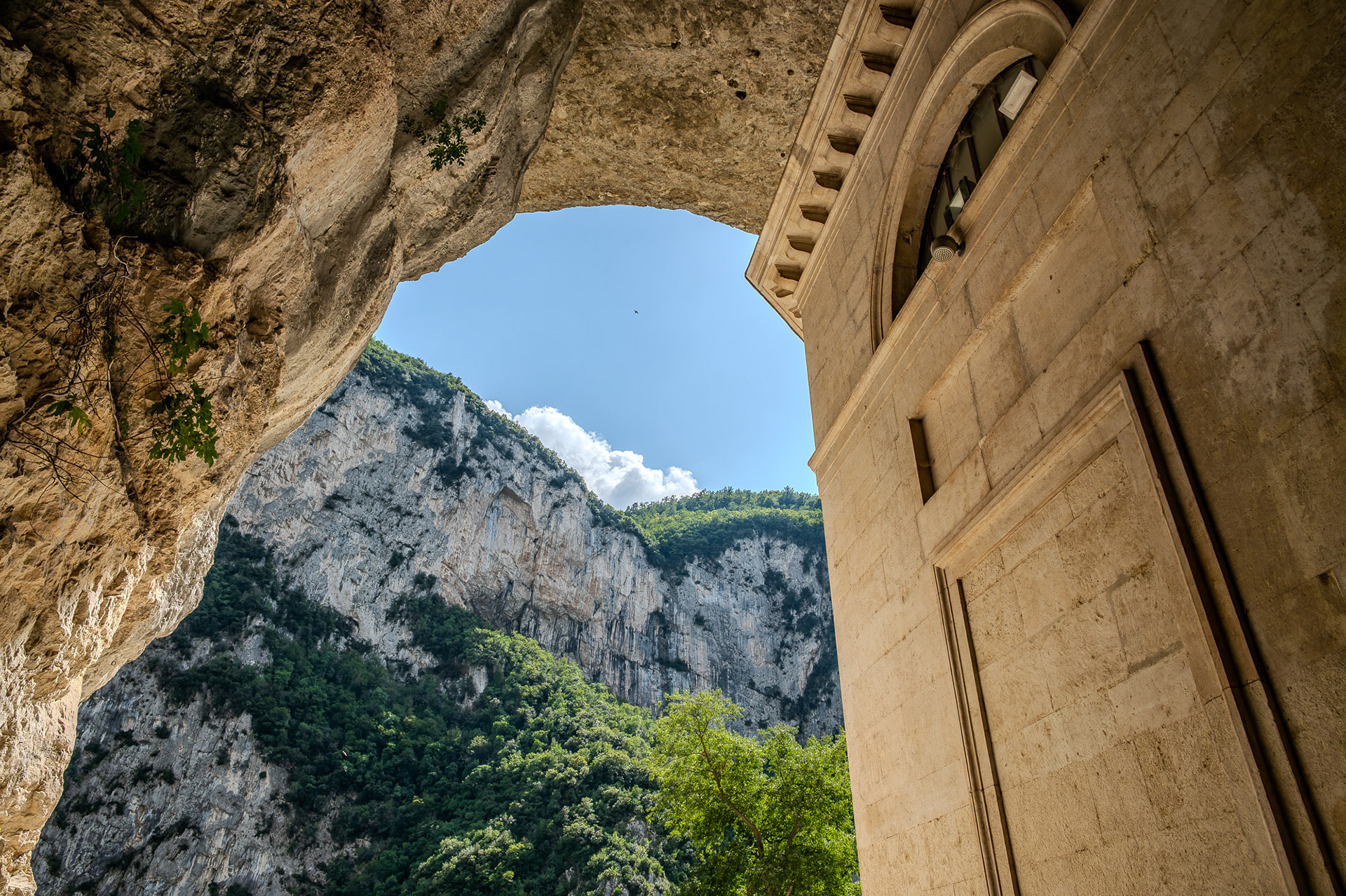
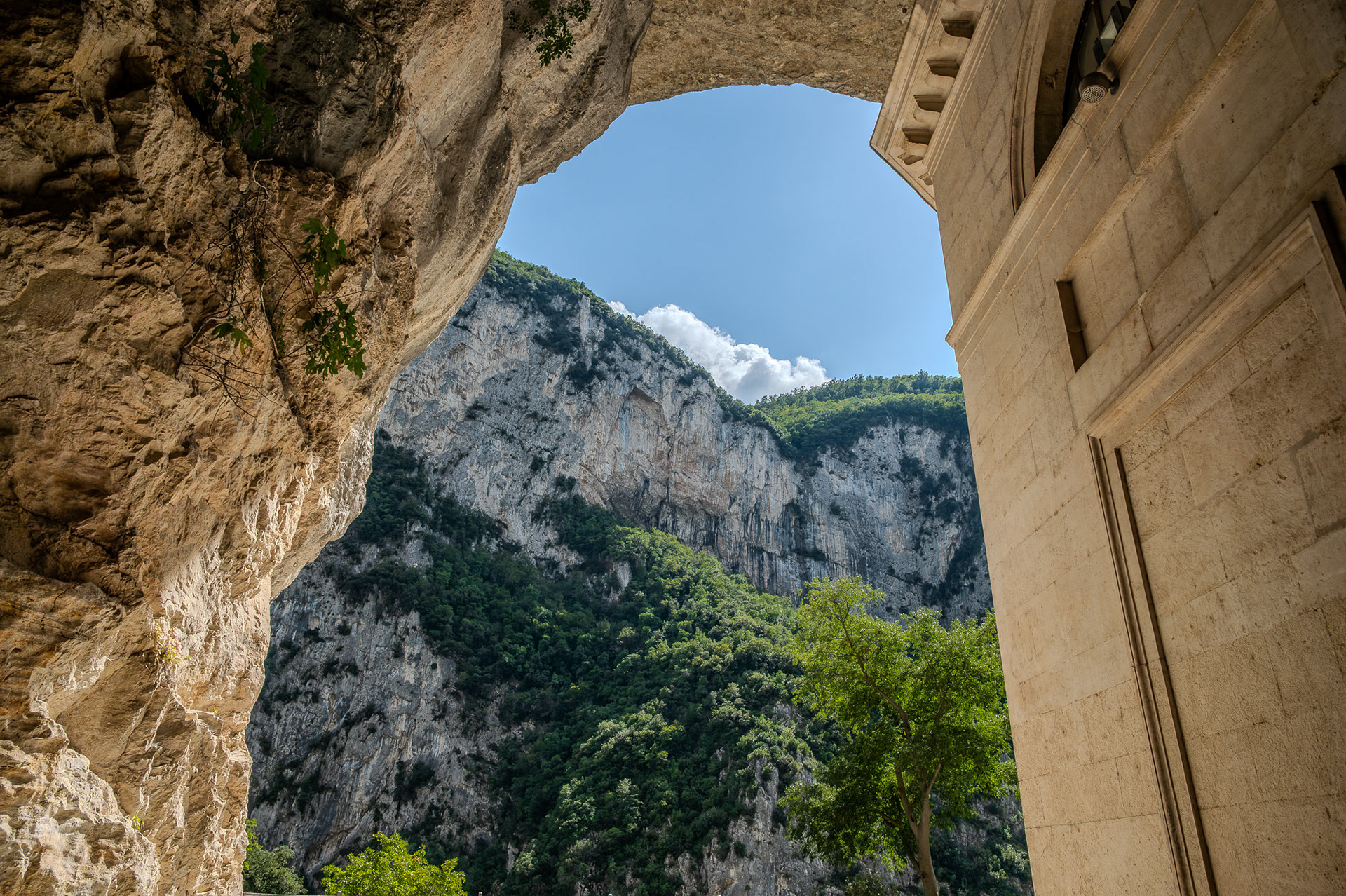
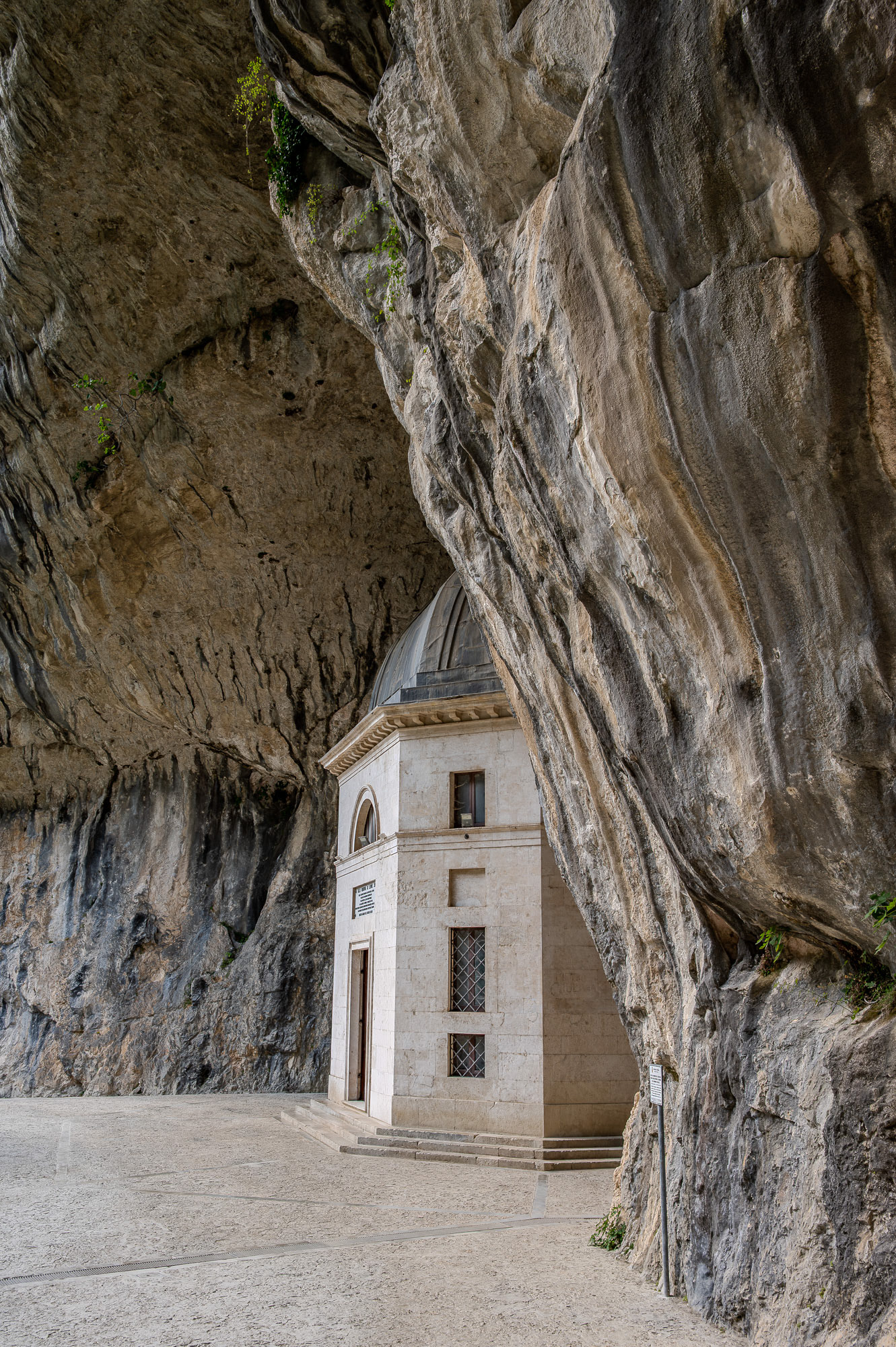
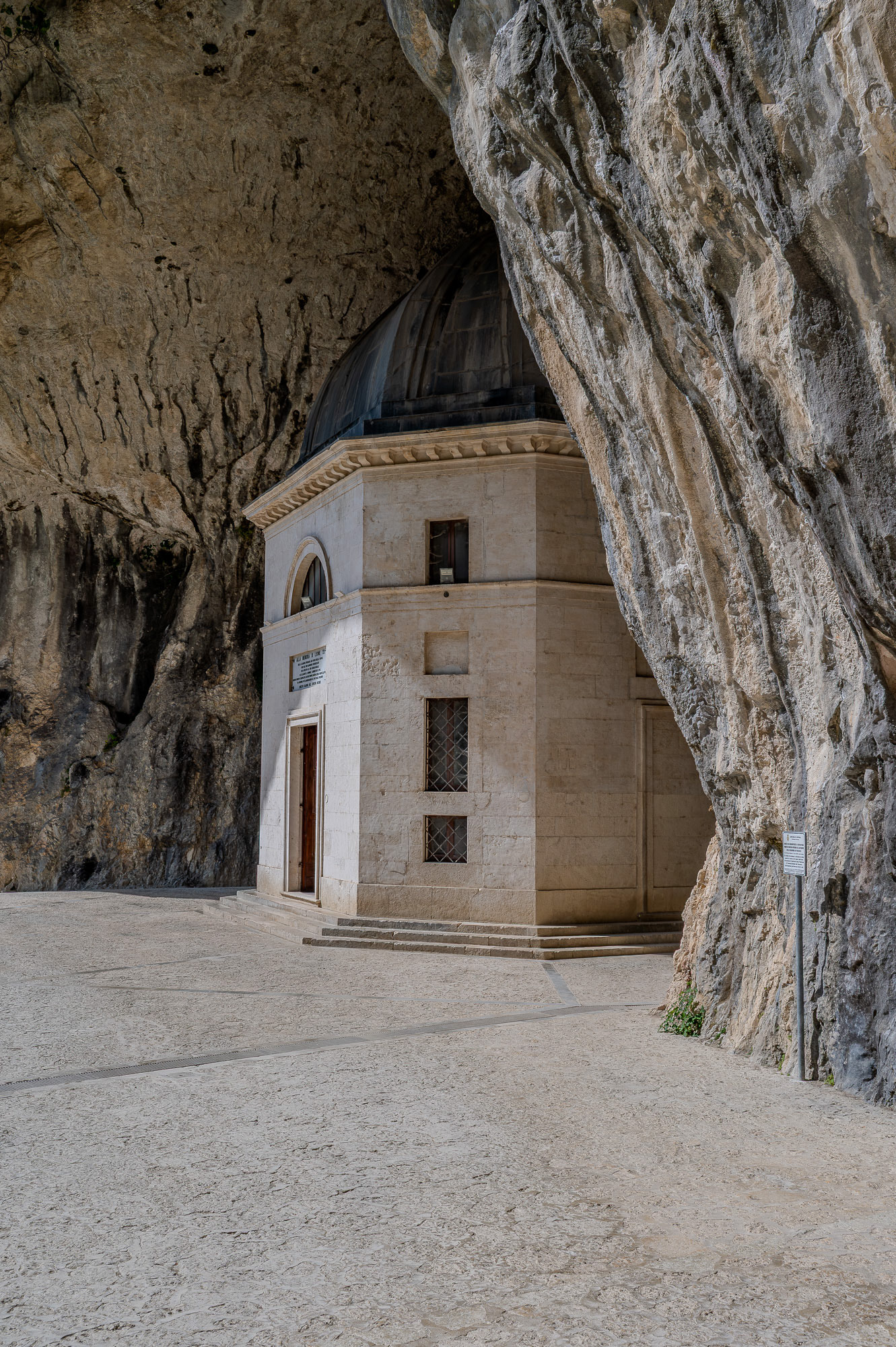
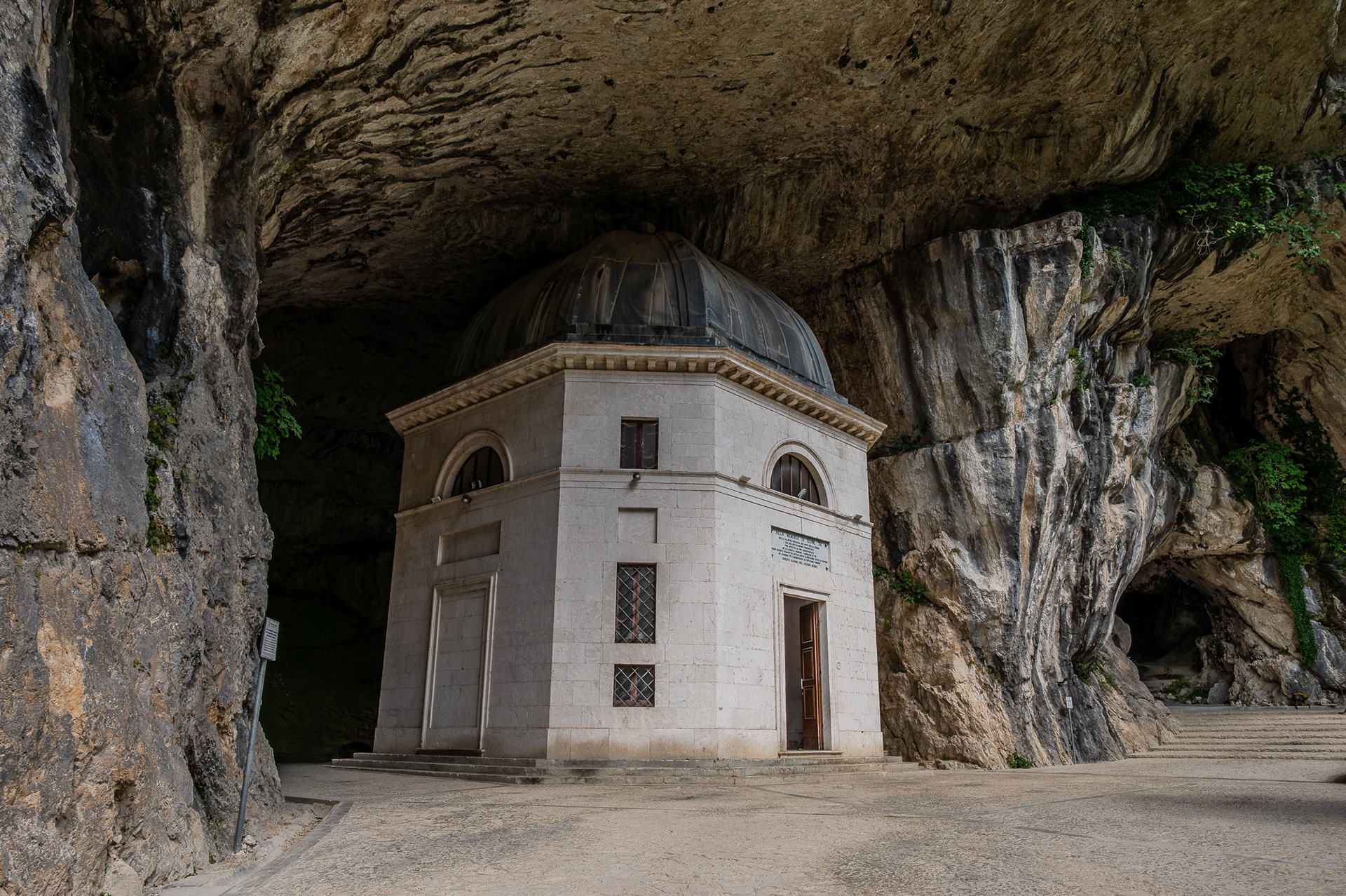
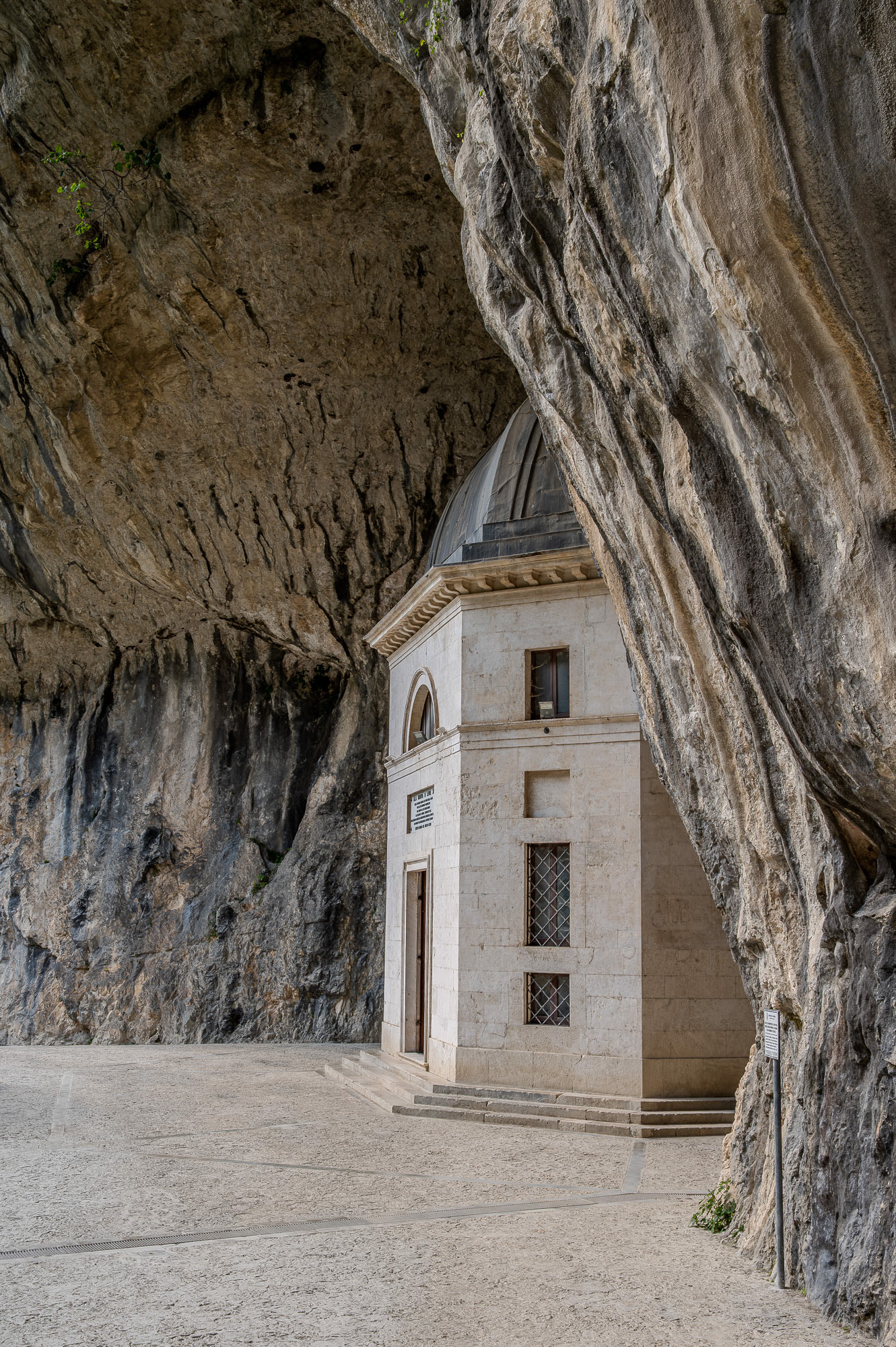
Genga. The Valadier Temple
2025
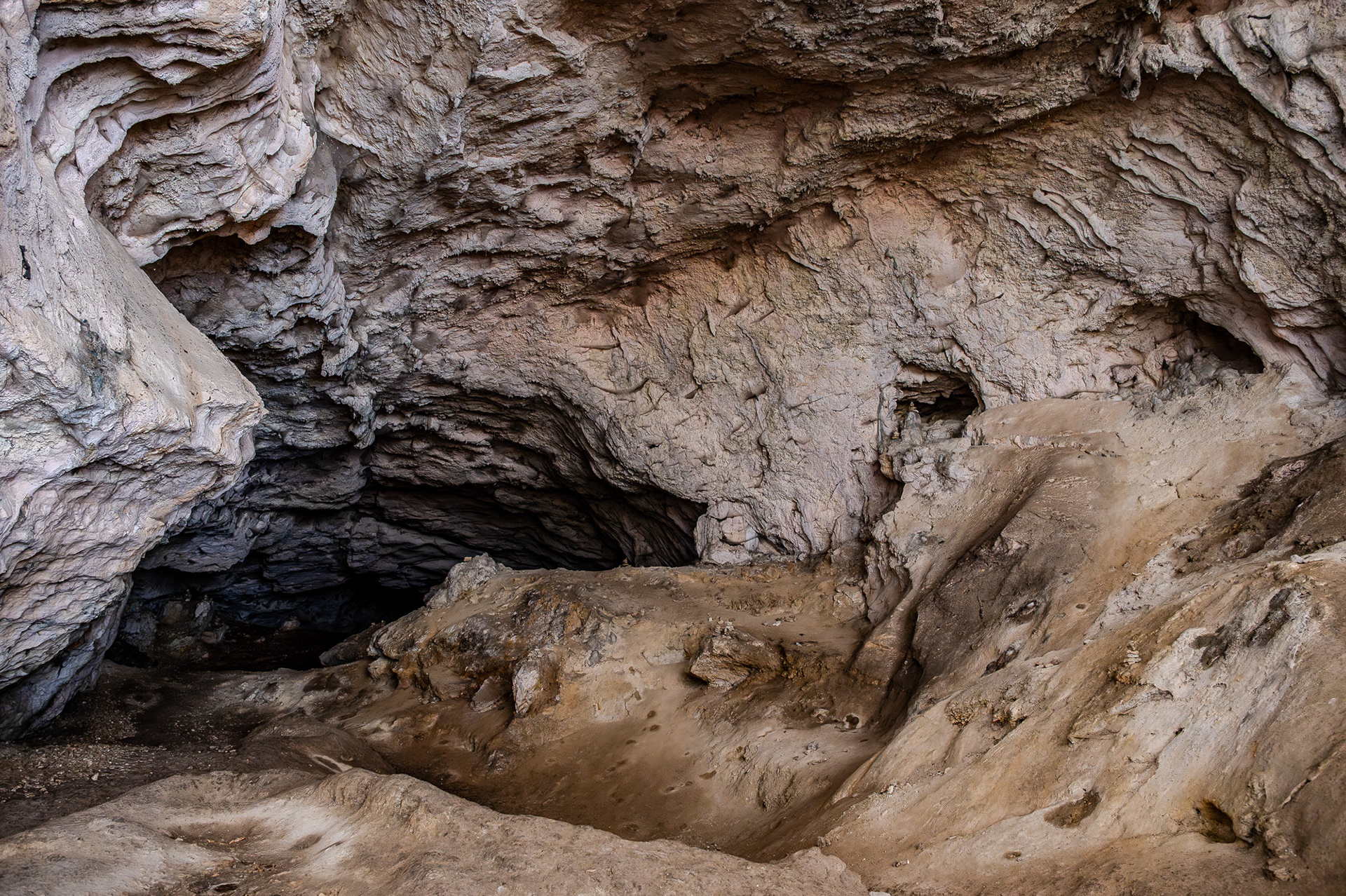
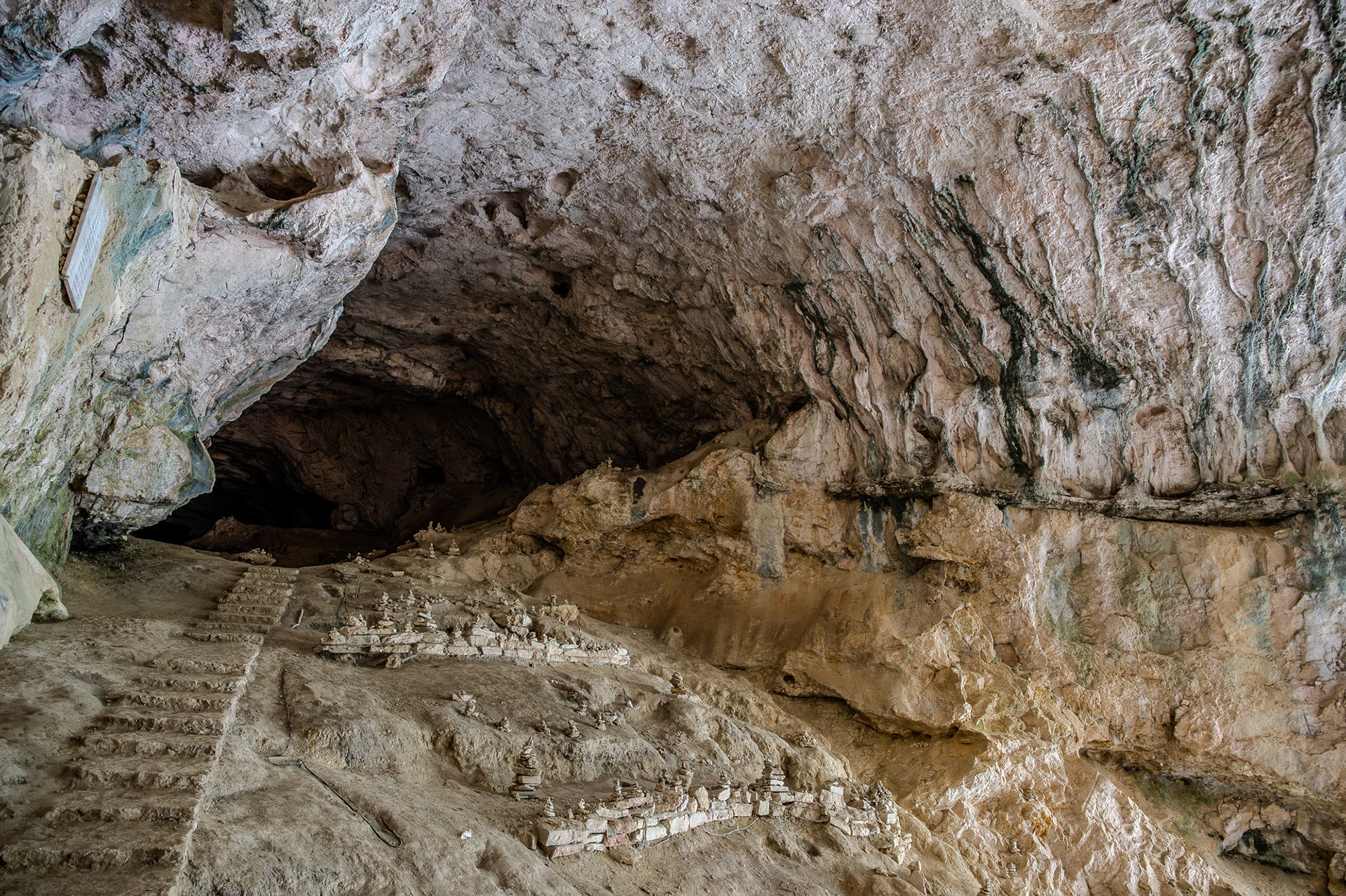
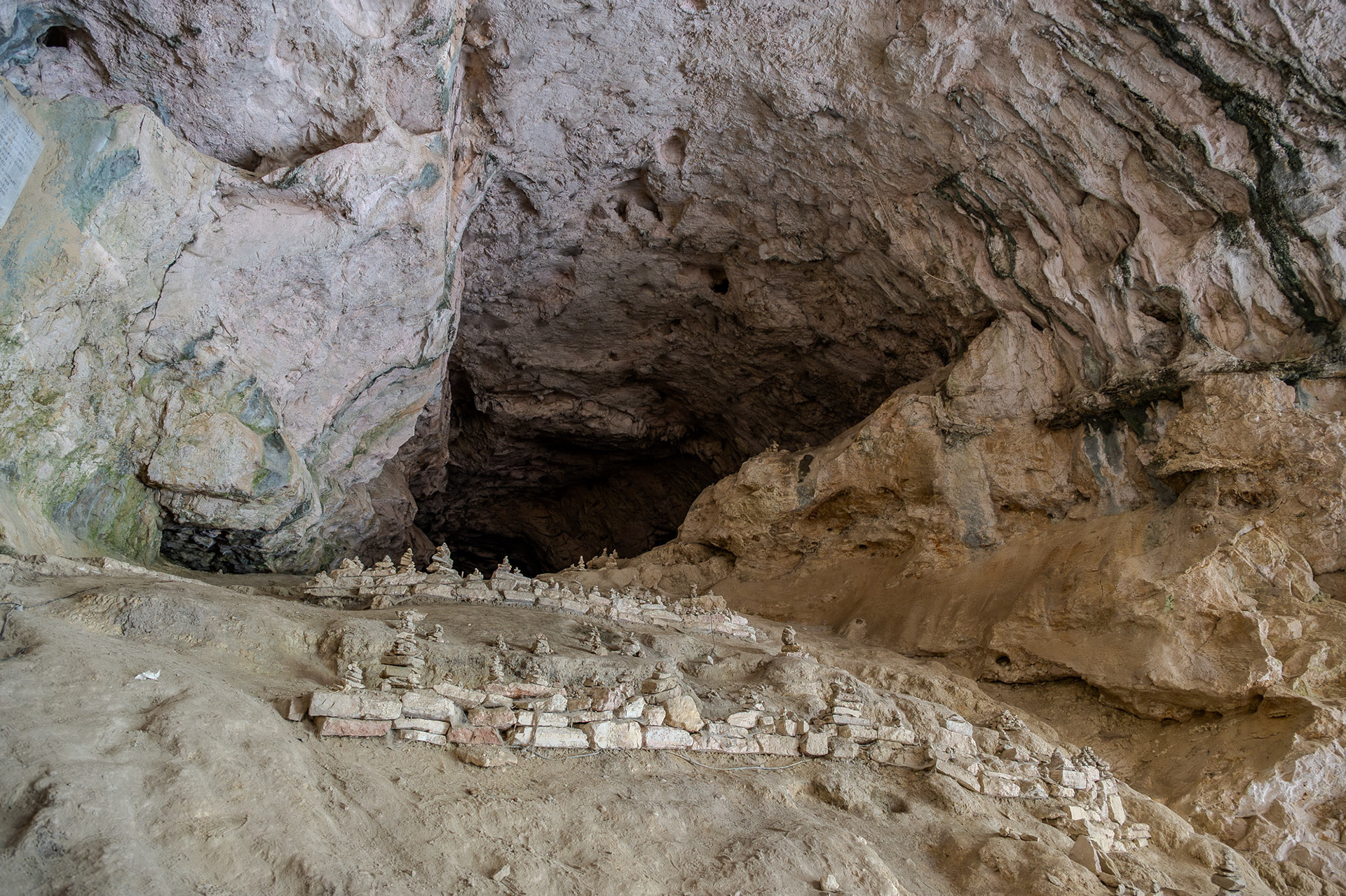
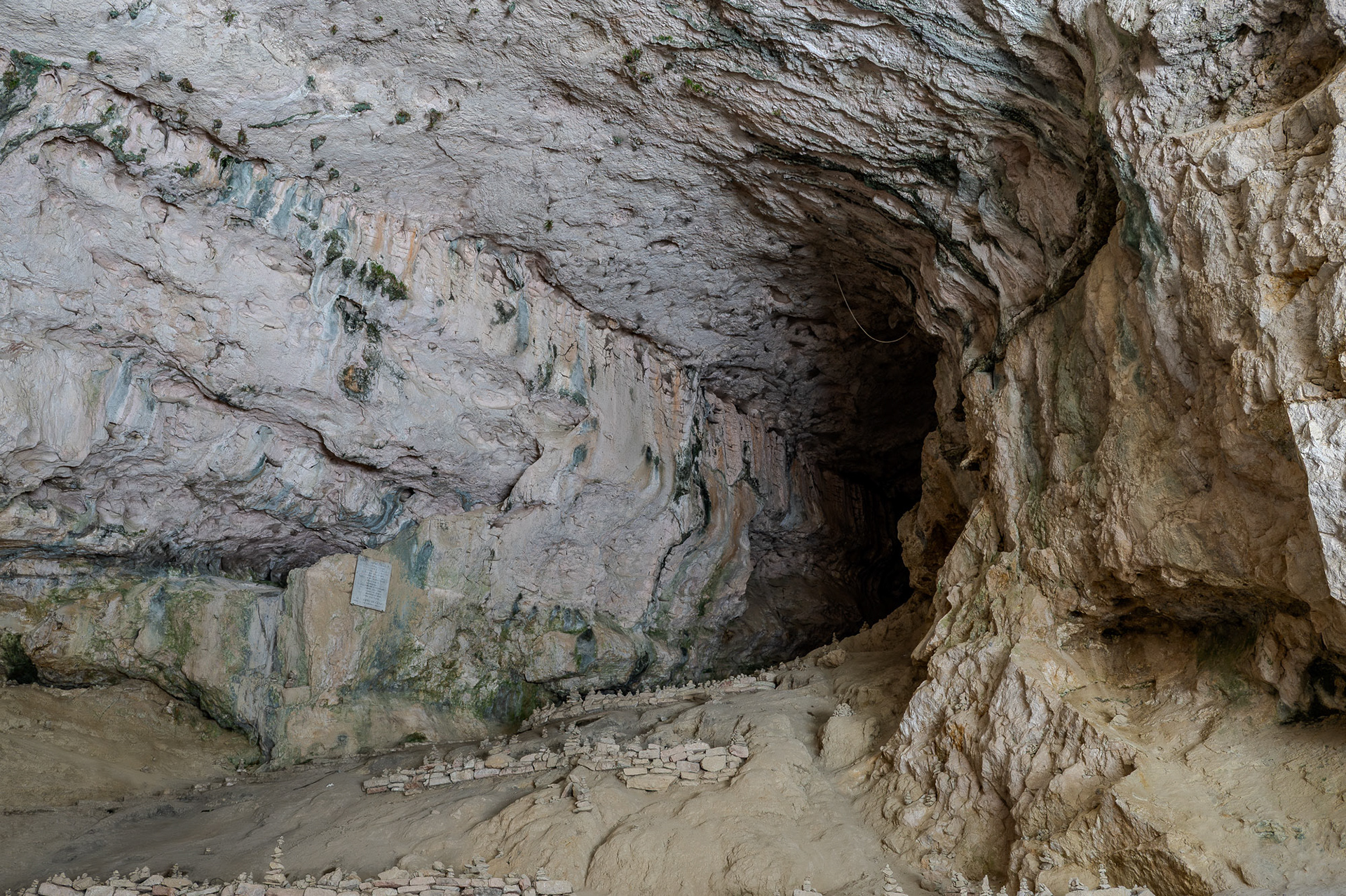
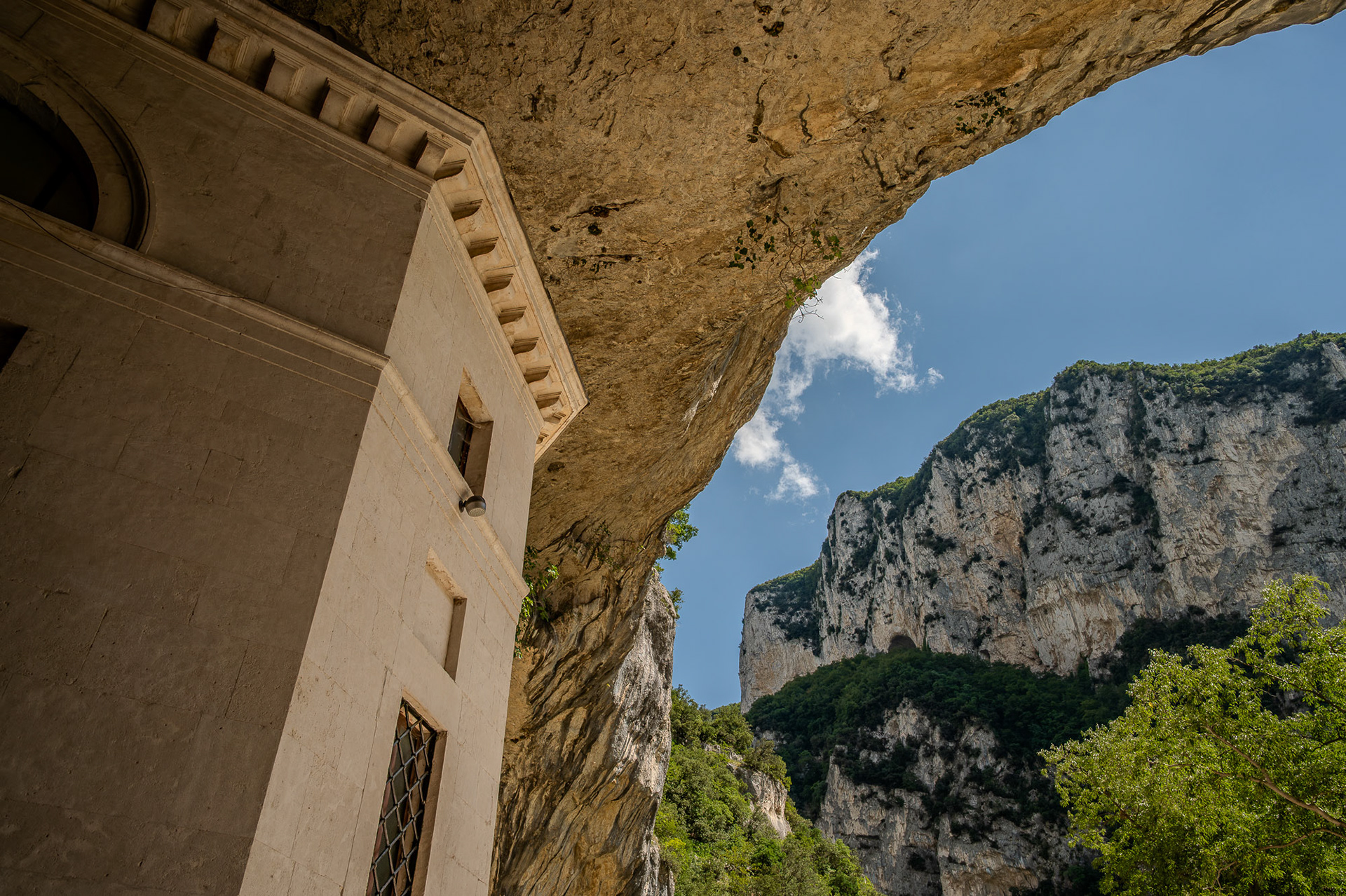
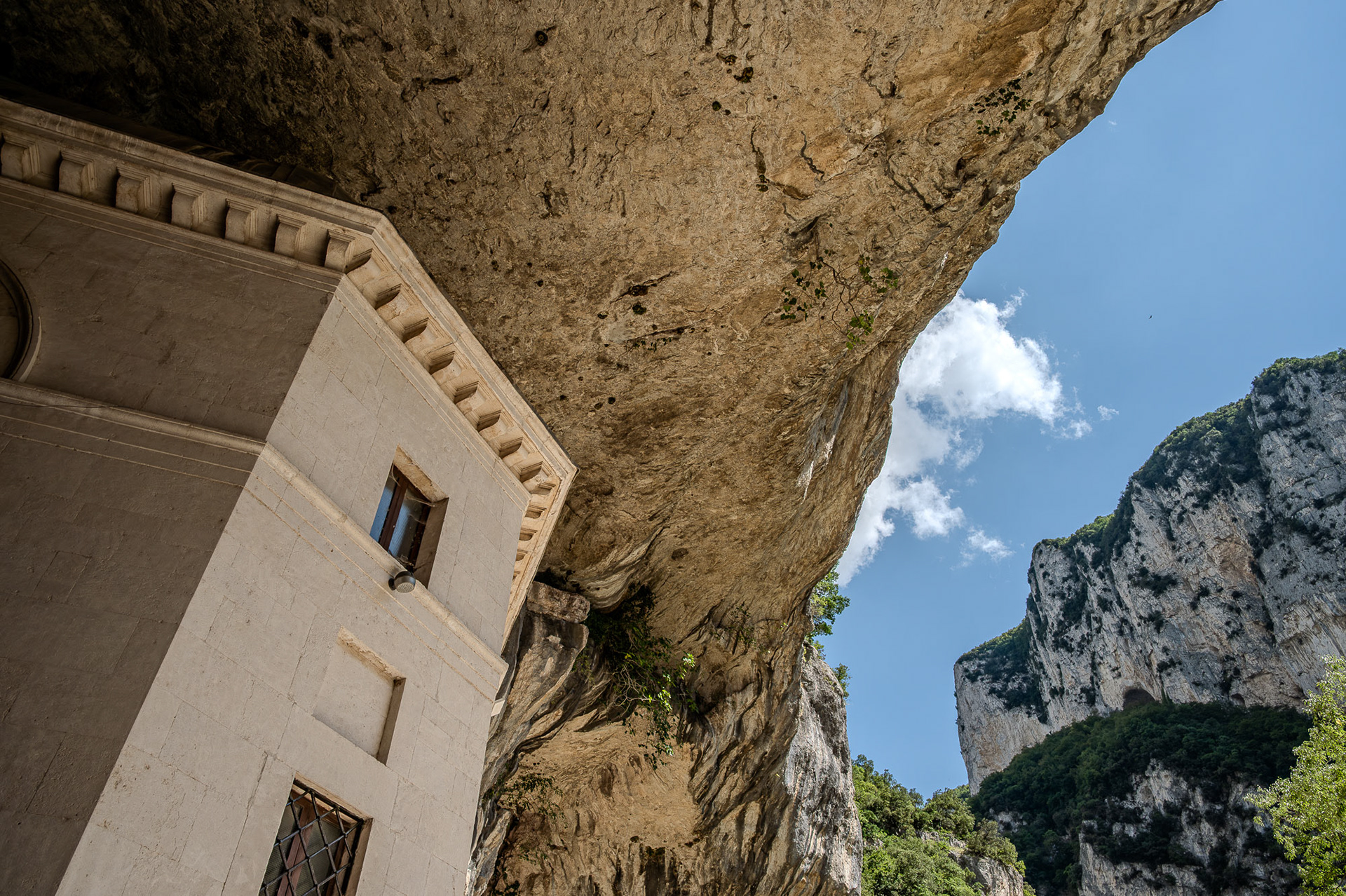
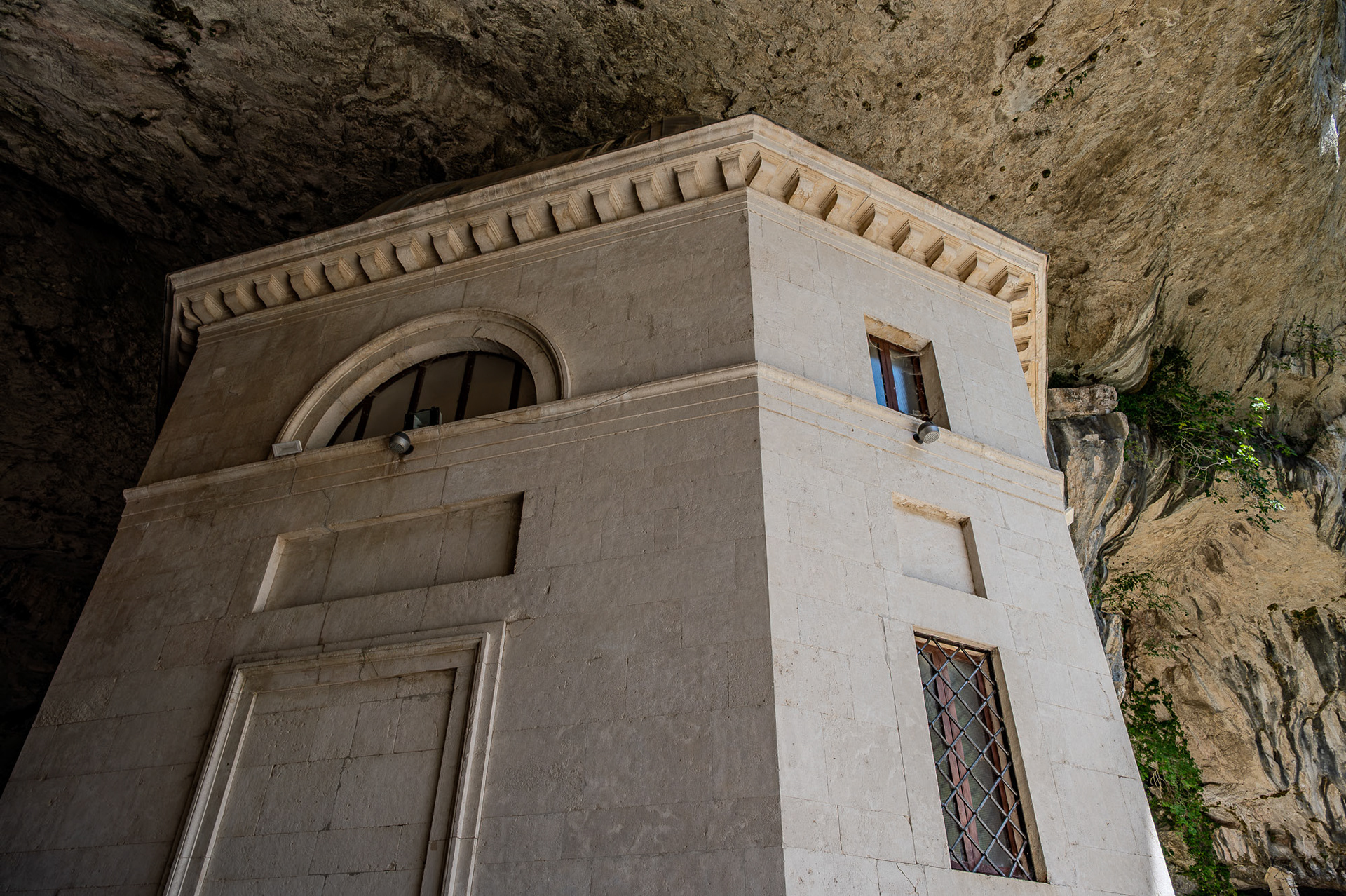
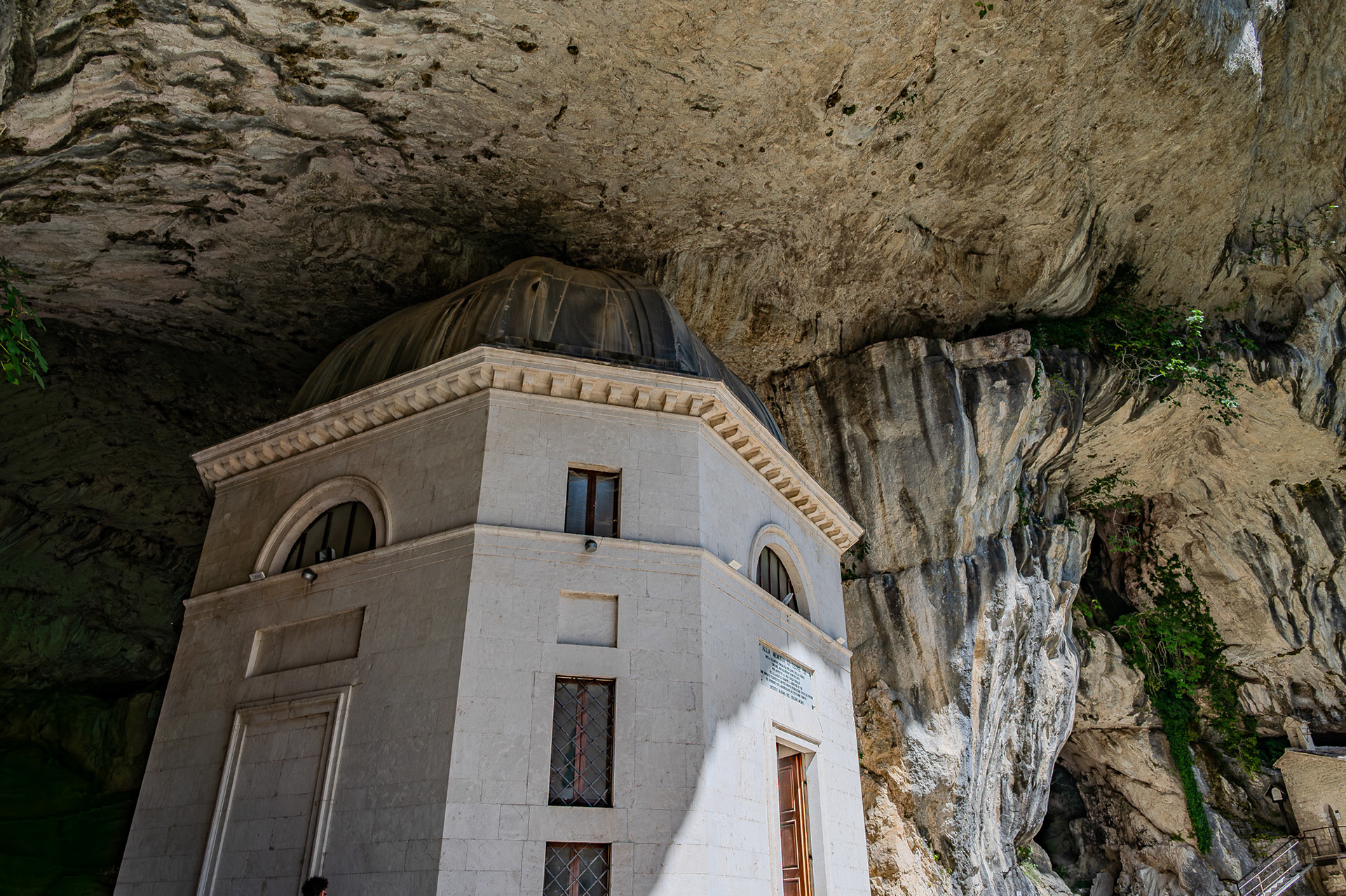
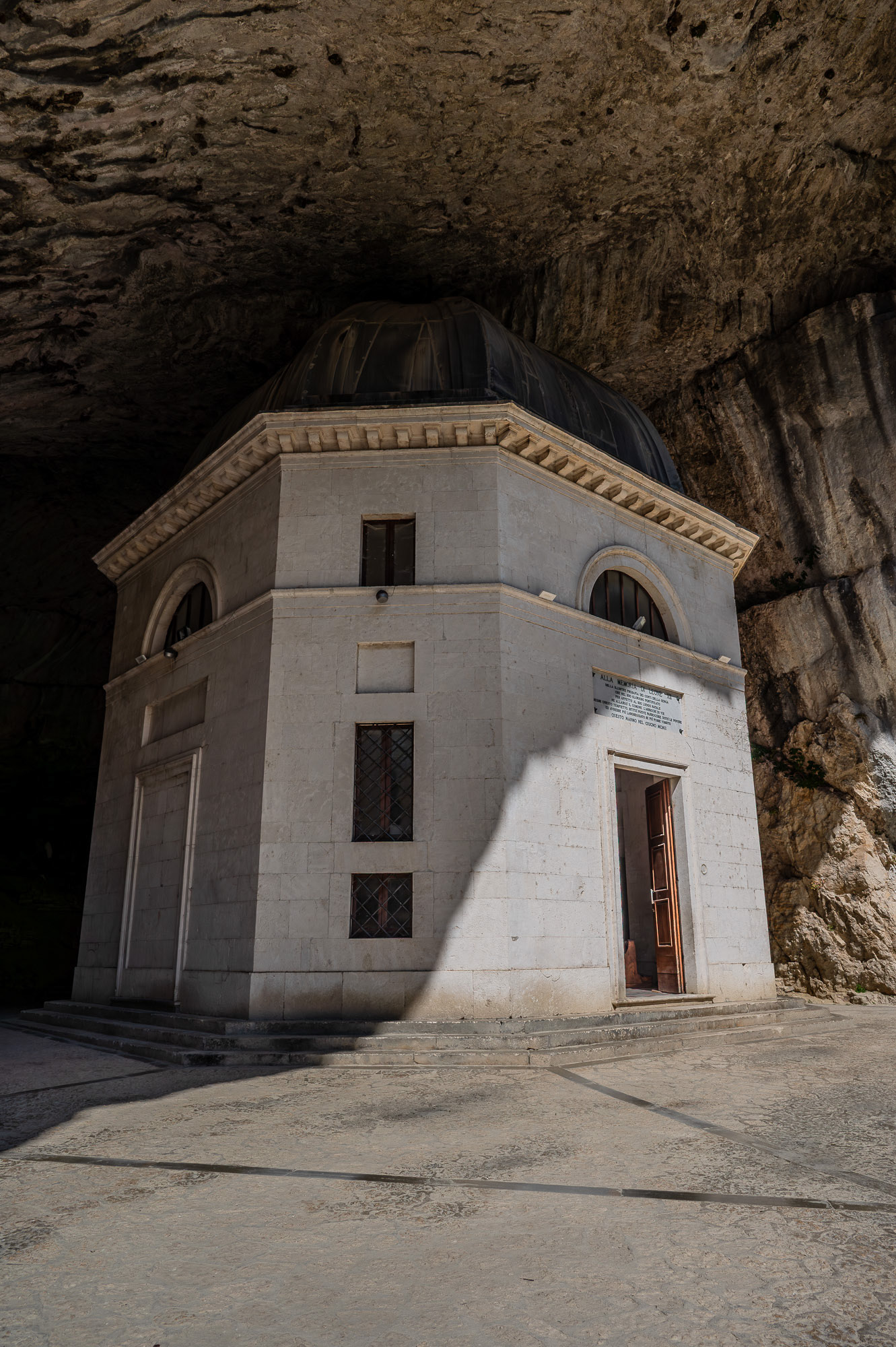
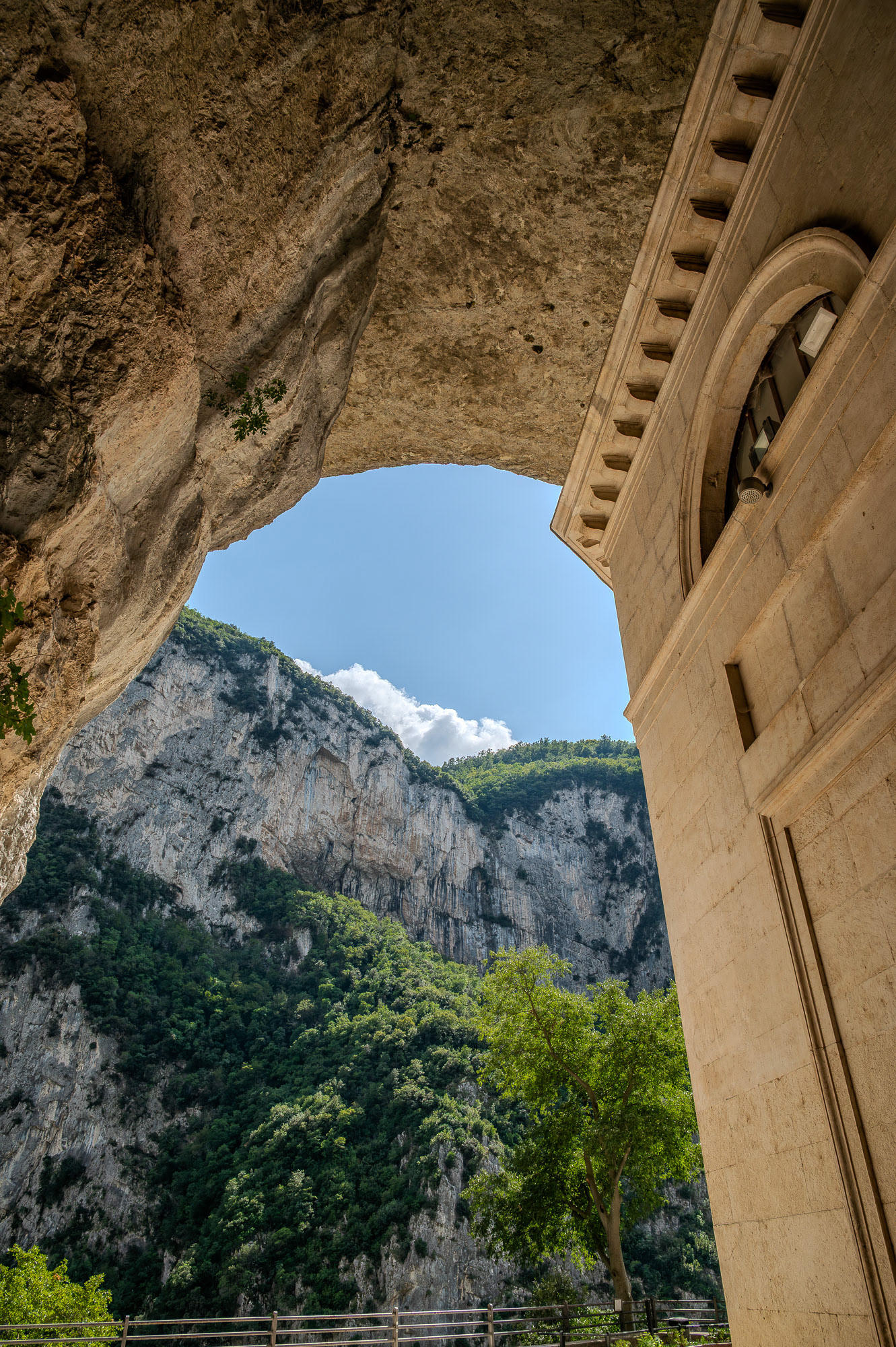
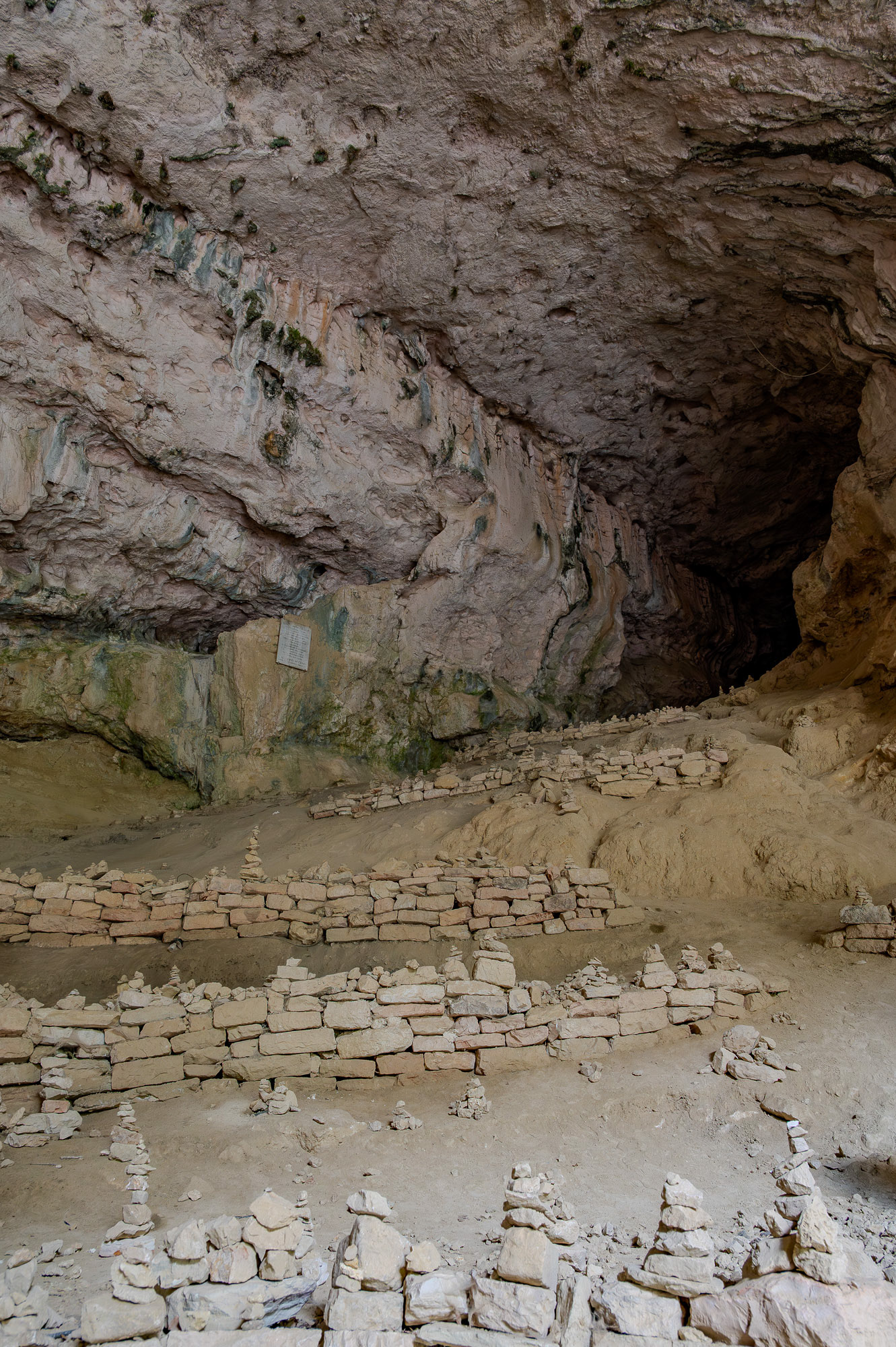
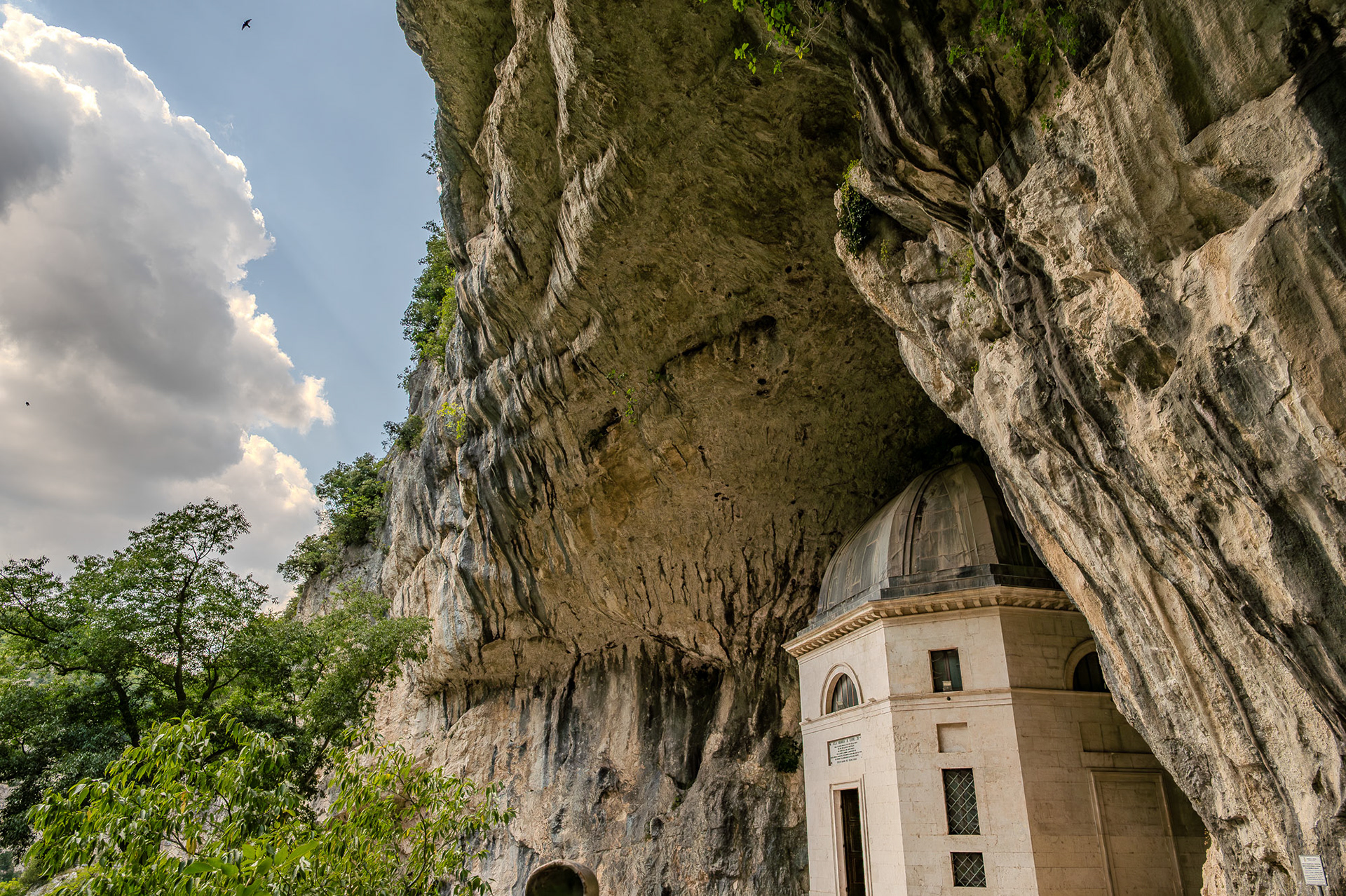
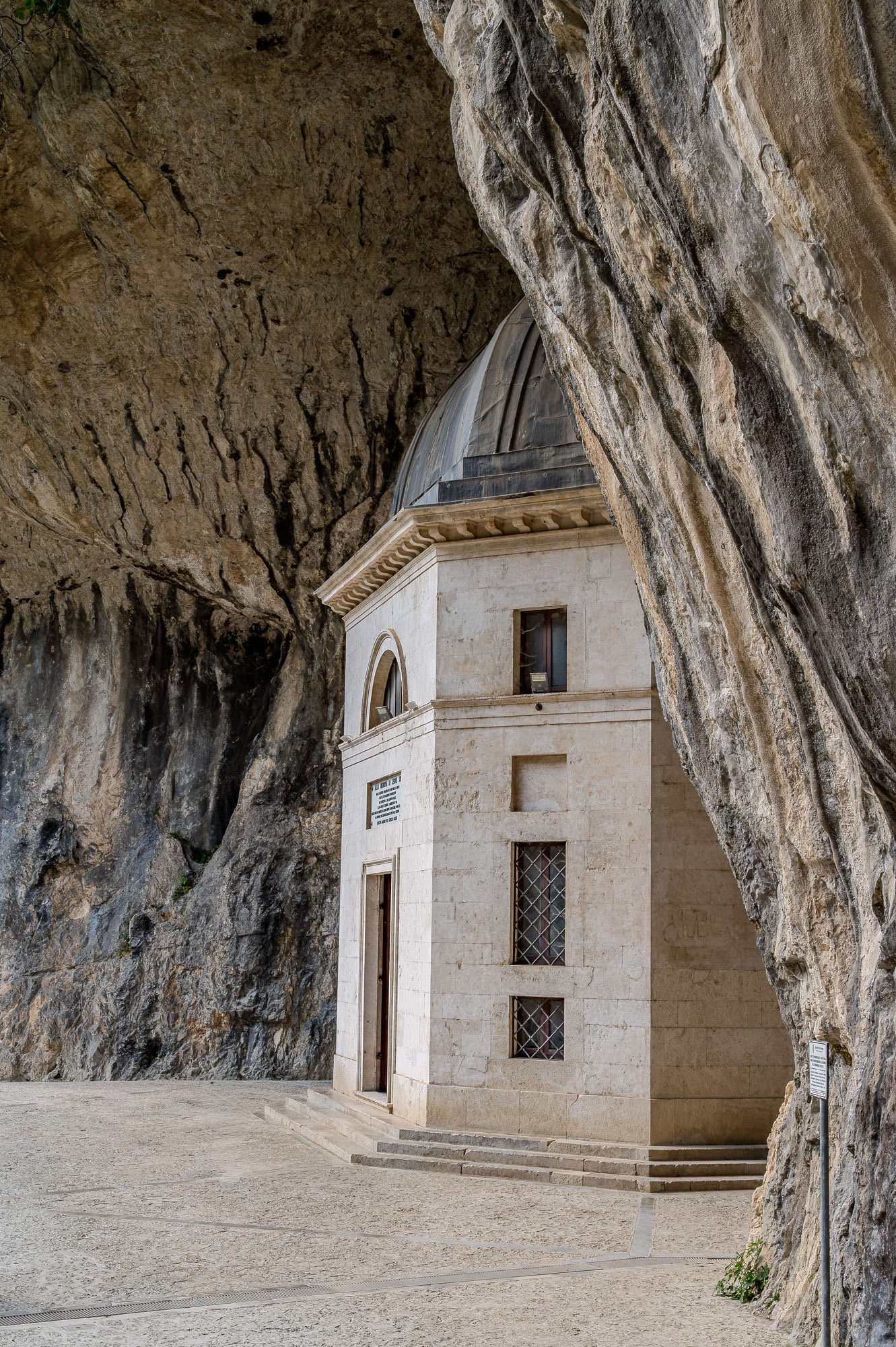
The Valadier Temple was built in 1828 next to an enormous cave at the behest of Pope Leo XII, designed by the architect Giuseppe Valadier.
You may also like
2022
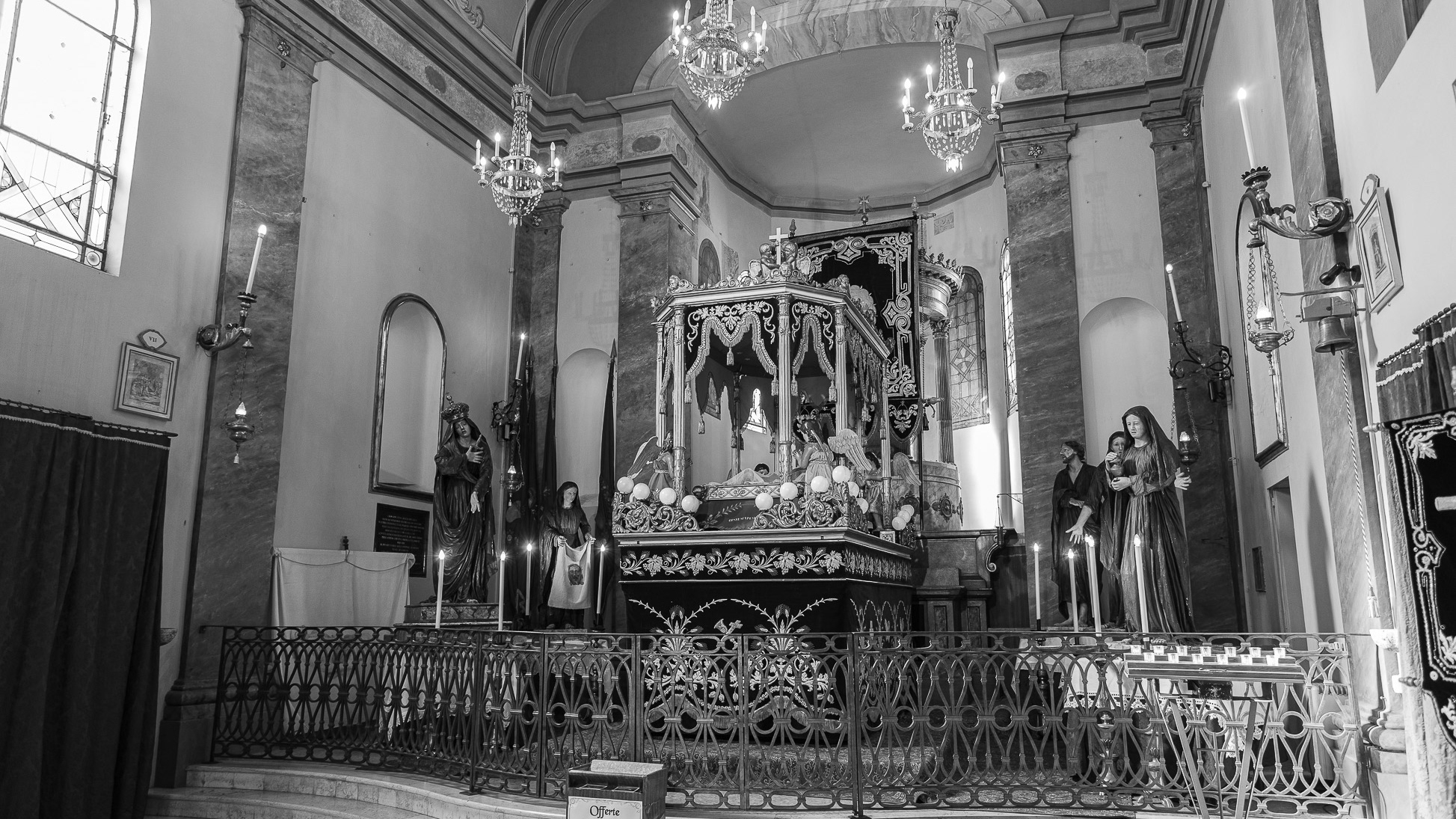
Offida, Ascoli Piceno. The church of the Addolorata
The church of the Addolorata was built in the century XV. The façade is characterized by a portico above which, leaning against the wall, there are two elegant sixteenth-century stone windows. Inside the church there is the "Bara" (as the chariot with canopy where the statue of the Dead Christ is placed) is commonly called, which is triumphantly carried in procession on the evening of Good Friday.
2023
Giulianova. The sanctuary of the M. dello Splendore
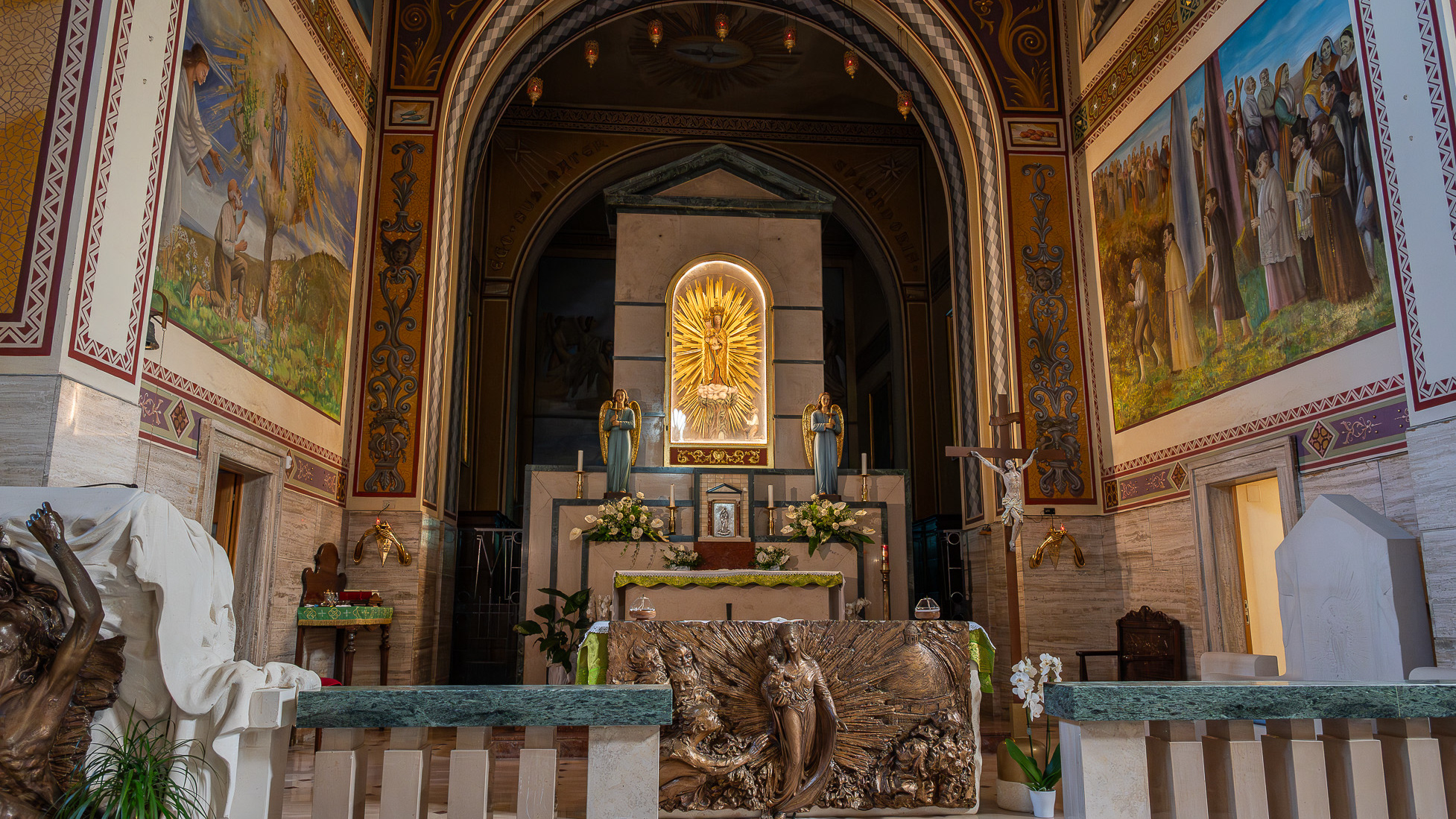
The sanctuary of the Madonna dello Splendore is a cult building in Giulianova, with the convent, the miraculous fountain and the Art Museum of Splendor and the "Padre Candido Donatelli" Library
2022
Recanati. The Torre del Borgo
36 meters high and crowned by Ghibelline battlements, the Torre del Borgo was built in the 12th century and is located in Piazza Giacomo Leopardi in Recanati
2024
Loreto. The Basilica of the Holy House
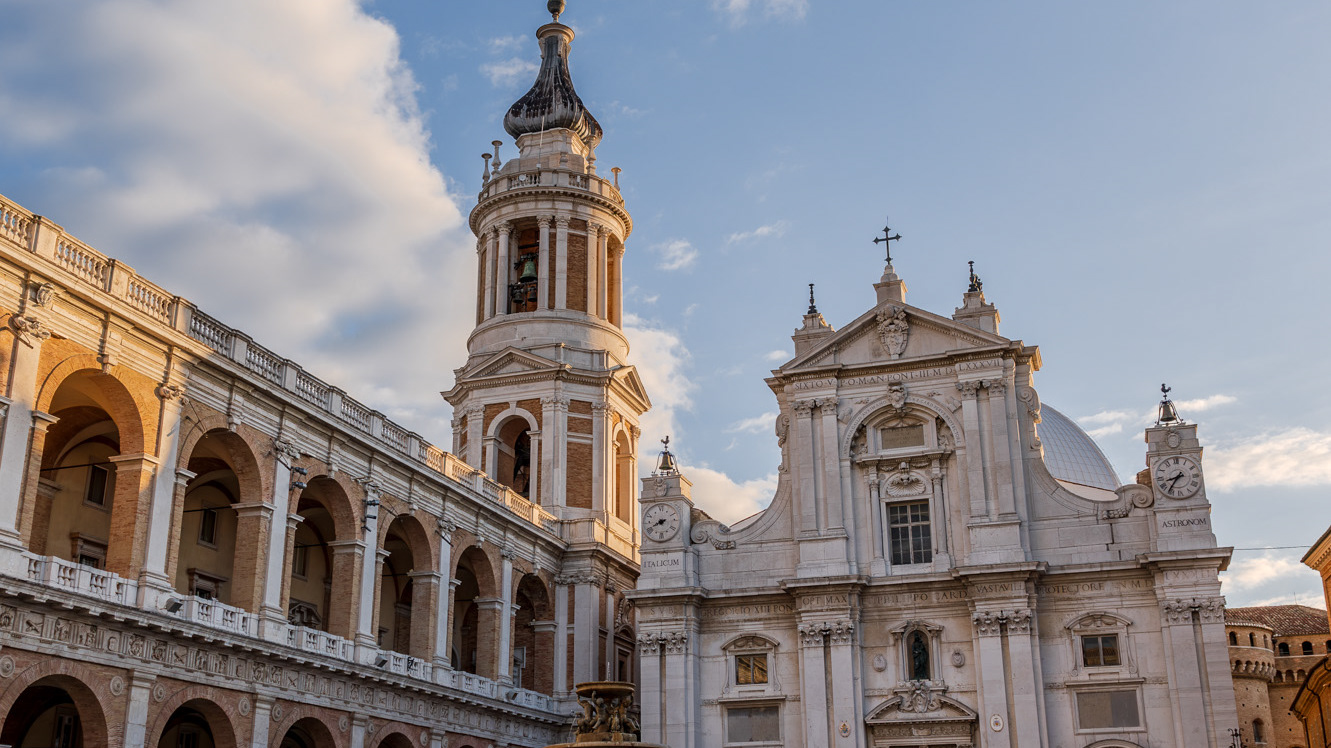
The Basilica of the Holy House is one of the main places of veneration of Mary and one of the most important and visited Marian shrines of the Catholic Church. It is located in Loreto.
2022
Recanati. Piazza Leopardi with the town hall
Recanati is an Italian town of 20 975 inhabitants in the province of Macerata in the Marche region.
2024
Ancona. La Cattedrale di San Ciriaco
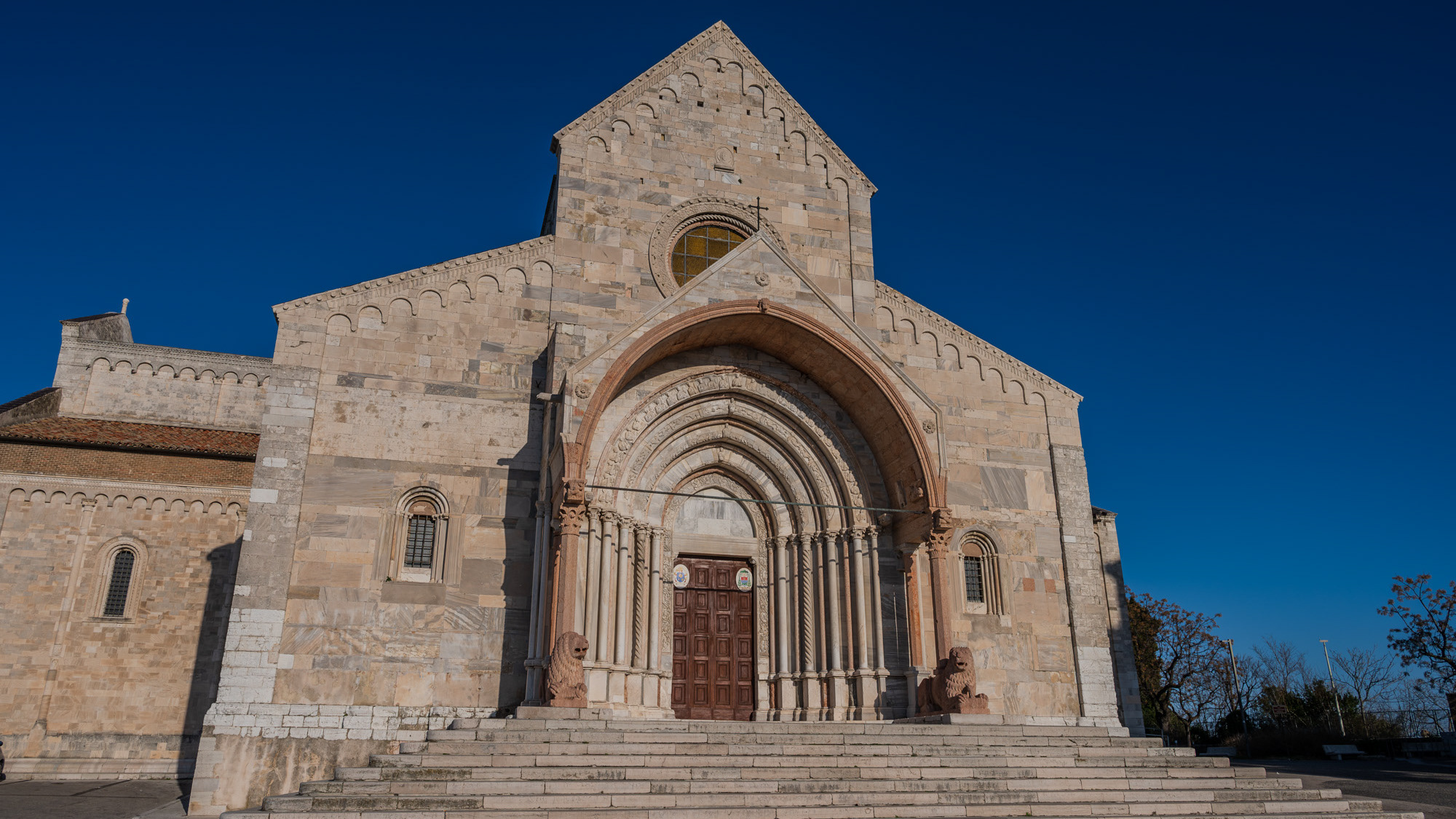
The cathedral of Ancona is dedicated to San Ciriaco. It is a medieval church in which the Romanesque style blends with the Byzantine one, evident in the plan and in many decorations
2025
Montedinove. Glimpses
Montedinove is an Italian municipality with 442 inhabitants in the province of Ascoli Piceno in the Marche region. The town sits on a hill 561 meters above sea level between the Aso and Tesino valleys, on the slopes of Mount Ascensione. It is part of the Sibillini mountain community. The town, inhabited since the Picene era, welcomed the people of Ascoli seeking refuge from the Lombards in 578. Later, the territory was donated in 1039 by Longinus to the Abbey of Farfa, and it was the people of Farfa who built the fortifications to defend the town. In 1239, the town was besieged by King Enzo but managed to emerge victorious after two years. In 1279, the town became a free municipality, while in 1586, under Pope Sixtus V, it became part of the Presidiato di Montalto. In the following centuries Montedinove followed the fate of the Papal States and Italy.
2022
Offida. Collegiate Church of S. Maria Assunta
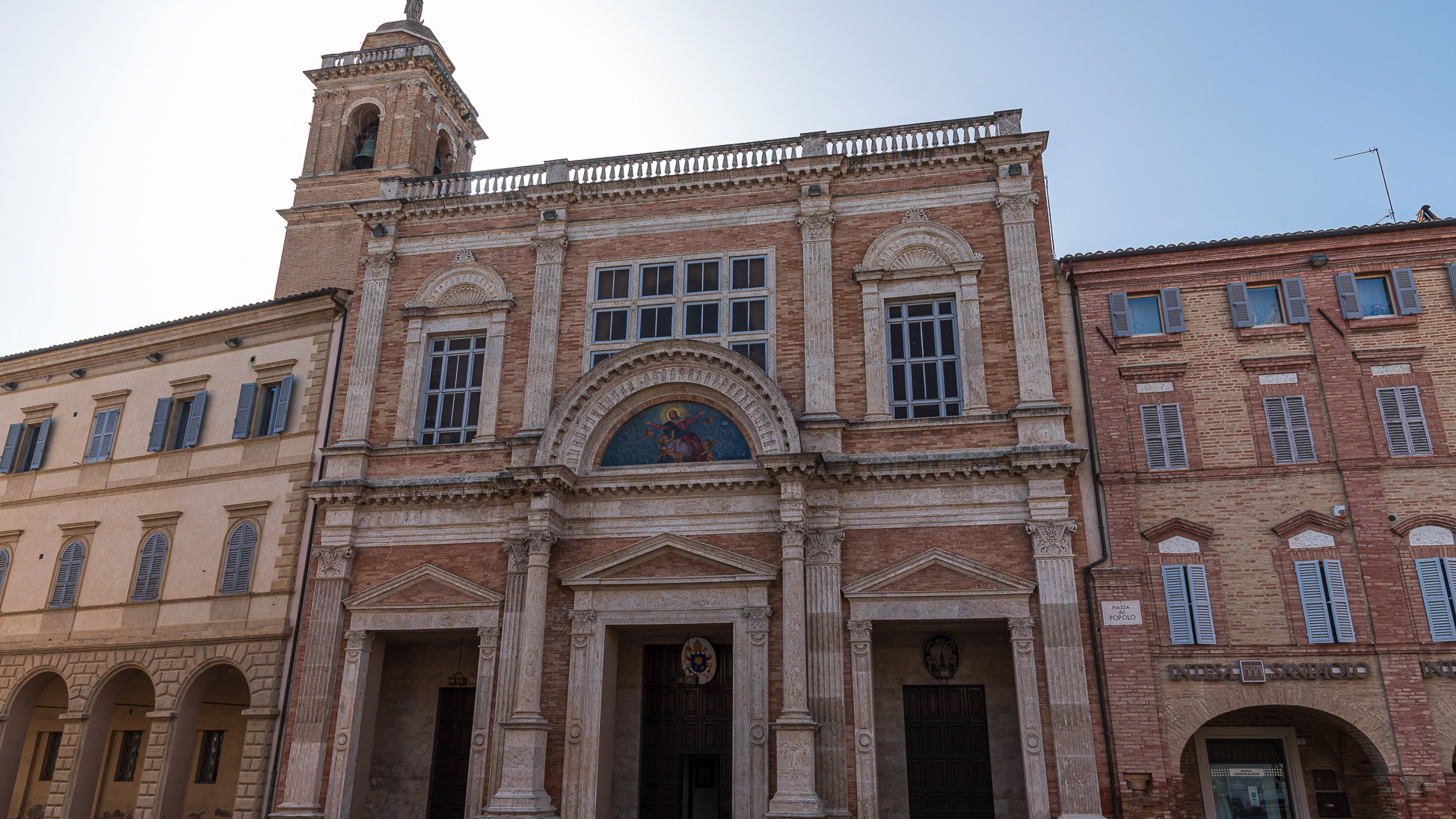
Collegiate Church. Built between 1785 and 1798 by the Ticino architect Pietro Maggi, who substituted and profoundly changed the design by Ascoli Lazzaro Giosafatti; it has a neoclassical Louis XVI interior and a facade built only at the end of the nineteenth century in an eclectic style of brick and travertine. Inside, among other things, there is a thirteenth-century wooden casket with 26 ivory figurines of northern art, a fourteenth-century processional cross, a fifteenth-century reliquary, a sixteenth-century wooden group, a wooden crucifix by Desiderio Bonfini (1612) , paintings of the fourteenth, fifteenth and sixteenth centuries (Crivellesque school and school of Pietro Alemanno). The choir carved with twisted columns and mirrors in Verona briar with two orders of 14 stalls was built by Alessio Donati for the church of Santa Maria della Rocca but was transferred in 1794 to the Collegiate, together with the relics of San Leonardo di Noblac preserved in a urn placed inside the main altar, also in wood. On 12 November 1994 the body of Blessed Corrado da Offida was placed in the third altar on the left, solemnly moved from Perugia, where it had been kept in the now no longer consecrated Church of San Francesco al Prato. The church, despite the distance, was affected by the strong earthquake that occurred in L'Aquila on 6 April 2009: in fact, on the day of the earthquake some pieces of plaster fell off the bell tower.
2022
Offida, Ascoli Piceno. Piazza del Popolo, the Town Hall
Town Hall. Built between the 13th and 14th centuries (central crenellated tower). The façade is preceded by a 7-arched portico with an elegant 14-arched loggia raised in the 15th century. Inside there is a small art gallery with works by Pietro Alamanno and Simone de Magistris from Caldarola. In the municipal historical archive there is, among other things, the mutilated parchment cadastre of the fourteenth century with a good 70 parchments in Gothic characters.
2025
Grottammare. The church of S. Agostino
The church, most likely donated by the community, was built by the Augustinian fathers between the end of the 15th century and 1517.